







What's Happening?
Indonesia is facing significant challenges with persistent poverty and pronounced income inequality, despite overall economic growth in Southeast Asia. According to data from the World Bank, Asian Development Bank (ADB), and national statistics offices
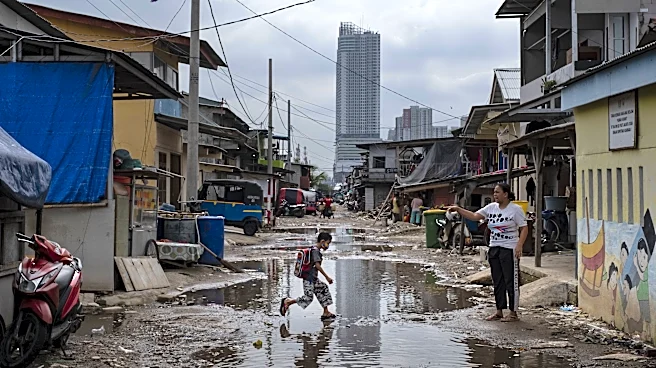
for 2025, 44.7% of Southeast Asia's population, totaling 306 million people, are classified as poor or low-income. In Indonesia, along with the Philippines, Vietnam, Thailand, Malaysia, Cambodia, Laos, Myanmar, and Timor Leste, the poor and low-income groups constitute 56% of the population, while the rich and upper-income earners make up only 3.55%. Poverty rates in Indonesia fall within the 12-30% range. The country's social protection system is described as limited, inadequately covering informal workers, rural populations, the elderly, and the disabled. This situation highlights a non-inclusive, elite-centered growth model within the region, where wealth is concentrated among dynastic family conglomerates and through cronyism and monopolization in various sectors.
Why It's Important?
The high levels of poverty and inequality in Indonesia are critical because they expose fundamental flaws in the country's development model, which prioritizes elite-driven growth over broad-based welfare. The limited social protection system leaves a significant portion of the population vulnerable, particularly informal workers who comprise a large segment of the workforce. This vulnerability can lead to social instability and hinder sustainable development. The concentration of wealth through dynastic conglomerates and cronyism suggests a lack of equitable opportunity and could foster public discontent. Furthermore, the inadequate investment in social protection, health, and education, as indicated by spending below global benchmarks, undermines human capital development and long-term economic resilience. This situation could also impact foreign investment and international perceptions of Indonesia's stability and commitment to inclusive growth.
What's Next?
Addressing Indonesia's deep-seated issues of poverty and inequality will require significant policy shifts. Future actions may include reforms to strengthen social protection systems to provide more comprehensive coverage for informal workers and vulnerable populations. There could be increased pressure for greater transparency and accountability in economic governance to curb cronyism and monopolization, potentially leading to anti-trust measures or stricter regulations on large conglomerates. Investment in public services like health and education is likely to be a focal point, aiming to meet international spending benchmarks and improve human development indicators. Civil society organizations and international bodies may advocate for more inclusive economic policies that prioritize equitable wealth distribution and opportunities for all citizens, potentially influencing future government agendas and development plans.
Beyond the Headlines
The persistent economic inequality in Indonesia extends beyond mere statistics, touching upon fundamental issues of social justice and national cohesion. The elite-centered growth model risks creating a deeply stratified society where opportunities are largely determined by birth or connections rather than merit. This can erode public trust in institutions and fuel social unrest, even if not immediately visible in widespread protests. The reliance on dynastic wealth and cronyism also raises ethical questions about fairness and the rule of law, potentially stifling innovation and genuine competition. In the long term, such disparities could lead to a brain drain, as talented individuals seek opportunities elsewhere, and could hinder Indonesia's ability to fully leverage its demographic dividend. The challenge for Indonesia is to transition from a growth model that benefits a few to one that fosters broad-based prosperity and social equity, ensuring that economic progress translates into improved quality of life for all its citizens.