
What's Happening?
China Minmetals, a state-owned enterprise, is intensifying its role as a global leader in critical minerals. Recent updates indicate that the company is enhancing its international legal and mediation
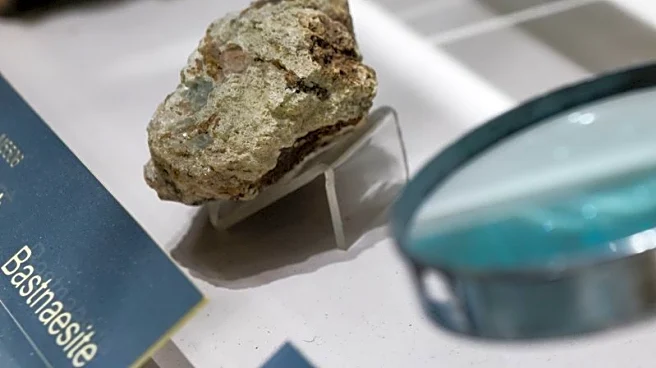
infrastructure to safeguard its overseas operations. This move is part of a broader strategy to secure China's supply of non-ferrous metals, rare and strategic minerals, and advanced materials. The company is also focusing on technological advancements in ore extraction and materials processing, aiming to dominate supply chains beyond mining. These efforts are aligned with China's 15th Five-Year Plan, emphasizing resource control, local-central integration, and technology-led self-reliance. Minmetals' operations span over 60 countries, covering various sectors including mining, smelting, and finance, positioning it as a key player in global metals markets.
Why It's Important?
The strategic consolidation by China Minmetals has significant implications for Western markets. As the company strengthens its control over critical minerals, it influences global supply, pricing power, and geopolitical leverage. This development challenges Western assumptions about the vulnerability of Chinese firms in international markets. By building a robust legal framework and focusing on technological innovation, Minmetals reduces its risk of asset write-downs and enhances its competitive edge. For Western investors and policymakers, this signals a need to reassess strategies in the metals market, as China's coordinated approach could affect availability and bargaining power in key materials like copper and rare earths.
What's Next?
China Minmetals is expected to continue its expansion of global assets, as evidenced by its ongoing projects in countries like Botswana and regions within China. This expansion aligns with China's national economic strategy, which prioritizes resource security and industrial upgrading. Western markets may face challenges in diversifying supply away from China, given Minmetals' consolidation of upstream assets. The company's actions are likely to remain consistent with Beijing's macroeconomic agenda, potentially acting counter-cyclically to secure strategic metals. Stakeholders in Western markets will need to monitor these developments closely to adapt to the shifting dynamics in the global minerals market.