








What's Happening?
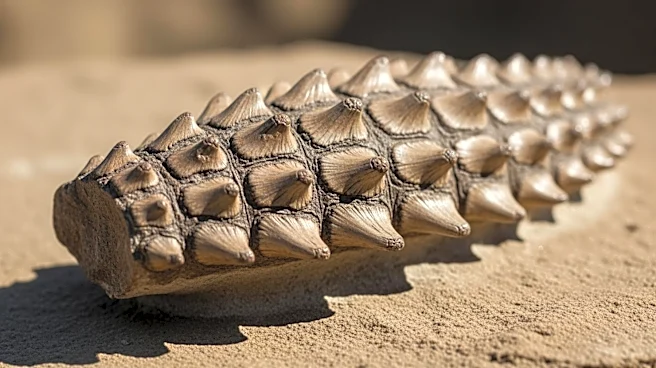
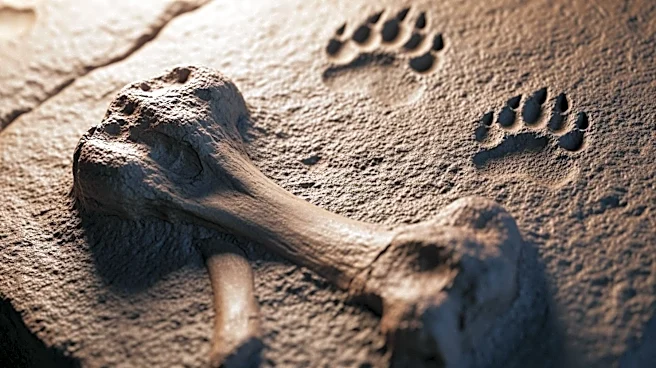
For over 60 years, fossils found in Japan's Ushikawa district were believed to be among the oldest human remains in the region. However, recent studies using advanced CT scanning have revealed that these bones actually belong to a brown bear, not a human.
This discovery challenges previous assumptions about early human life in Japan and shifts the timeline of human occupation. The fossils, initially thought to be a human humerus and femur, were misidentified due to their shape and structure. This revelation is part of a broader pattern of fossil misidentification in paleontology.
Why It's Important?
The reclassification of these fossils has significant implications for understanding Japan's prehistoric timeline. It suggests that the earliest human fossils in mainland Japan date back to 14,000-17,000 years ago, rather than over 20,000 years as previously thought. This finding refines the historical narrative of human migration and settlement in the region. It also highlights the importance of modern technology in paleontological research, demonstrating how advanced methods can correct historical scientific errors and improve our understanding of human history.
What's Next?
Researchers may continue to re-evaluate other fossil findings using modern technology to ensure accurate historical records. This could lead to further revisions of prehistoric timelines and enhance our understanding of early human life. The scientific community might also focus on improving identification techniques to prevent future misclassifications. Additionally, this discovery could inspire renewed interest and funding in paleontological research in Japan and other regions.