



What's Happening?
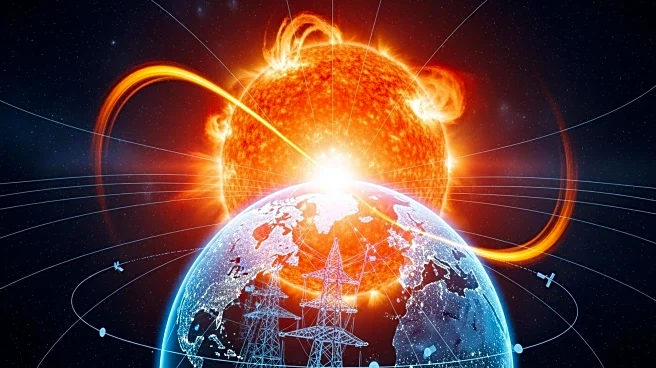
The potential impact of severe space weather, such as solar storms, is being highlighted as a significant risk to global infrastructure. These storms, which can cause the Northern Lights, also have the potential to disrupt electricity supplies, satellites,
and air travel. A recent incident involved 6,000 planes grounded by Airbus due to a software update necessitated by solar radiation interference. The UK government includes severe space weather in its National Risk Register, alongside other major threats like nuclear incidents and terrorist attacks. The Carrington Event of 1859, the most intense geomagnetic storm recorded, serves as a historical benchmark for planning against such disruptions.
Why It's Important?
The implications of severe space weather are profound, affecting multiple sectors. Disruptions to electricity and satellite communications can lead to significant economic losses and safety concerns. For instance, GPS systems, crucial for navigation in aviation and other industries, could be compromised, leading to potential gridlock and safety hazards. The aviation industry, in particular, faces risks as planes rely heavily on GPS for safe operations. The broader impact on global infrastructure underscores the need for robust contingency planning and international cooperation to mitigate these risks.
What's Next?
Governments and industries are likely to increase investments in research and technology to better predict and mitigate the effects of space weather. This includes enhancing satellite resilience and developing alternative navigation systems. International collaboration may also be strengthened to share data and strategies for managing these global threats. The aviation industry, in particular, may prioritize updates to software and hardware to withstand solar radiation interference.
Beyond the Headlines
The ethical and legal dimensions of space weather preparedness involve ensuring equitable access to resources and information for all countries, especially those with less technological capability. Long-term shifts may include increased focus on space weather monitoring and the development of global standards for infrastructure resilience. The cultural fascination with the Northern Lights contrasts with the potential dangers posed by the solar activity that causes them, highlighting the dual nature of natural phenomena.