



What's Happening?
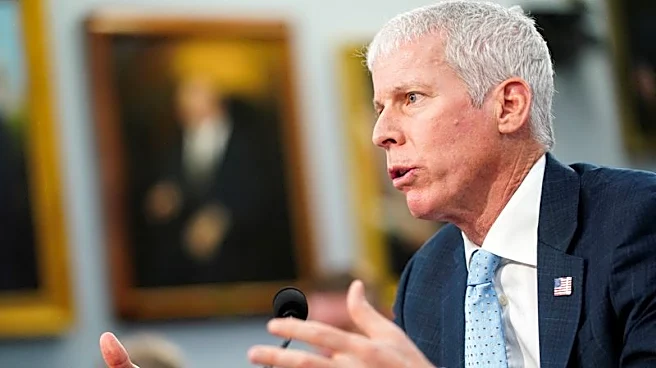
Representative Thomas Massie, a Republican from Kentucky, participated in a gathering at conservative media personality Tucker Carlson's home in Maine, alongside former Representative Marjorie Taylor Green and former National Counterterrorism chief Joe
Kent. This meeting fueled speculation about a new political movement centered on conservative criticism of the Iran war. All attendees have previously clashed with President Trump regarding the conflict in Iran. Joe Kent, who resigned from the Trump administration due to his opposition to the war, is exploring ways to channel anti-war sentiment into political action, suggesting that war critics could 'hijack' the Republican Party, similar to President Trump's initial rise. The group is in regular contact and is plotting how to influence future elections, particularly looking ahead to the 2028 presidential primary. While a new political party was discussed, the logistical challenges of ballot access were noted, leading to consideration of 'hijacking' the GOP or utilizing an existing third party like the Libertarian Party.
Why It's Important?
This development signifies a growing internal dissent within the MAGA movement and the Republican Party regarding foreign policy, specifically the Iran war. The formation of an anti-war coalition involving prominent conservative figures like Representative Massie, Marjorie Taylor Green, and Tucker Carlson could challenge the party's traditional foreign policy stances and potentially reshape its future direction. If this movement gains traction, it could lead to a 'reset' of the Republican Party on foreign policy in the 2028 presidential primary, as suggested by Joe Kent. This internal conflict could impact future elections, potentially affecting the candidacies of figures like Vice President JD Vance, who might face 'credibility' issues due to his association with an administration that launched a new war despite President Trump's initial anti-foreign entanglement campaign pledges. The ongoing war is already shadowing the 2026 midterm elections, impacting President Trump's approval ratings and threatening the party's control of Congress.
What's Next?
The anti-war coalition is in its early stages, with members still working to define its objectives and strategies. Future steps will likely involve continued discussions among the key figures to 'flesh out' the coalition's purpose and determine the most effective path for political action. This could include efforts to influence the 2028 presidential primary by backing an anti-war candidate or attempting to 'hijack' the Republican Party from within. The group is also considering the viability of a third-party movement, though significant hurdles exist. The political fallout from the Iran war is expected to continue impacting the 2026 midterm elections and the 2028 presidential contest, making the actions of this anti-war faction increasingly relevant. Reactions from major stakeholders, including President Trump and other Republican leaders, will be crucial in determining the movement's trajectory and its potential to reshape the party's foreign policy platform.
Beyond the Headlines
The emergence of this anti-war faction within the MAGA movement highlights a deeper ideological struggle within the Republican Party regarding interventionism versus non-interventionism. While President Trump initially campaigned on an 'America First' platform that included avoiding foreign entanglements, the Iran war has created a rift, leading some of his former allies to question the party's direction. This internal debate could lead to a significant re-evaluation of the Republican Party's core principles on foreign policy, potentially shifting it towards a more isolationist stance. The ethical implications of engaging in prolonged conflicts and the economic costs associated with them are central to this critique. The movement also raises questions about the influence of media personalities like Tucker Carlson in shaping political discourse and mobilizing grassroots support for alternative political agendas, potentially leading to a more fragmented and ideologically diverse political landscape within the conservative movement.