








What's Happening?
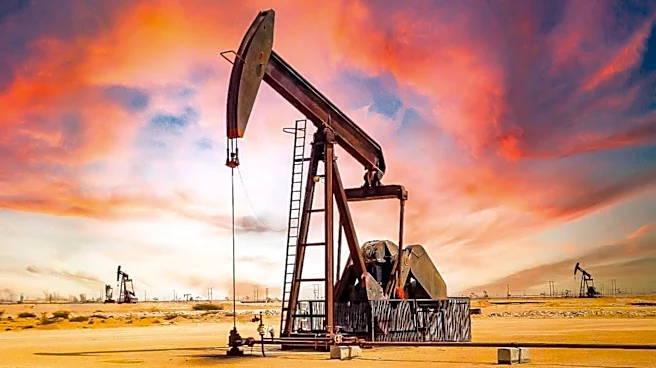
Amidst rising oil prices due to renewed U.S.-Iran tensions, U.S. lawmakers are advocating for a windfall tax on oil companies' excess profits. The proposal, led by Democratic Senator Sheldon Whitehouse, aims to tax profits that exceed pre-war levels,
redistributing half of these profits to lower-income Americans through tax rebates. This initiative follows similar measures in the U.K. and EU, which have successfully raised significant revenue post-Russia's invasion of Ukraine. The American Petroleum Institute criticizes the proposal, arguing it undermines investment certainty in the energy sector. The tax targets large oil companies producing or importing over 300,000 barrels per day, leaving most U.S. production unaffected.
Why It's Important?
The proposed windfall tax reflects growing political pressure to address the economic impact of high energy prices on American consumers. By targeting excess profits, the tax aims to provide financial relief to households struggling with increased energy costs. However, the oil industry warns that such measures could deter investment in domestic energy production, potentially affecting long-term energy security. The debate underscores the broader challenge of balancing economic relief with the need to maintain a stable and competitive energy sector.
What's Next?
The proposal faces significant legislative hurdles, with its success dependent on garnering broader political support. If enacted, the tax could set a precedent for future regulatory approaches to managing energy sector profits during periods of geopolitical instability. The outcome may also influence ongoing discussions about transitioning to renewable energy sources, as lawmakers weigh the benefits of taxing fossil fuel profits against the need to incentivize cleaner energy investments.