
What's Happening?
Doctors and public health workers in the Democratic Republic of Congo (DRC) are reporting that the Ebola outbreak in the eastern region is spreading at an alarming rate. Dr. Richard Kojan, involved in previous
Ebola outbreaks, described the situation as 'completely out of control.' The outbreak, centered in Ituri province, is exacerbated by deep mistrust within local communities, which hampers containment efforts. Dr. Richard Lokudi, director of a hospital in the hardest-hit area, noted that the virus is spreading 'at an exponential speed,' with patients escaping from hospitals, creating further chains of contamination. The World Health Organization (WHO) has identified over 1,000 suspected cases of the Bundibugyo strain of Ebola, with more than 230 suspected deaths. The outbreak has been declared a public health emergency of international concern by the WHO.
Why It's Important?
The rapid spread of Ebola in the DRC poses a significant threat to public health, not only within the region but potentially on a global scale. The lack of a vaccine for the Bundibugyo strain complicates containment efforts. The situation is further aggravated by a lack of trust in health measures and insufficient laboratory testing capacity, which delays diagnosis and increases the risk of transmission. The outbreak highlights the critical need for international support and resources to manage the crisis effectively. Cuts to U.S. humanitarian aid have been criticized for weakening the response capacity, underscoring the importance of sustained international cooperation in addressing such health emergencies.
What's Next?
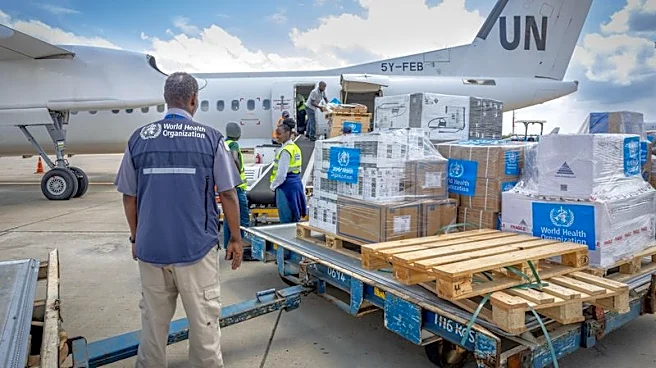
The immediate need is for increased international support to provide resources, including laboratory testing capacity and protective equipment, to the affected regions. Building trust within local communities is crucial to ensure compliance with health measures. The WHO and other international bodies are likely to continue monitoring the situation closely, with potential for increased intervention if the outbreak continues to escalate. The U.S. and other nations may face pressure to reassess their aid strategies to better support global health initiatives.
Beyond the Headlines
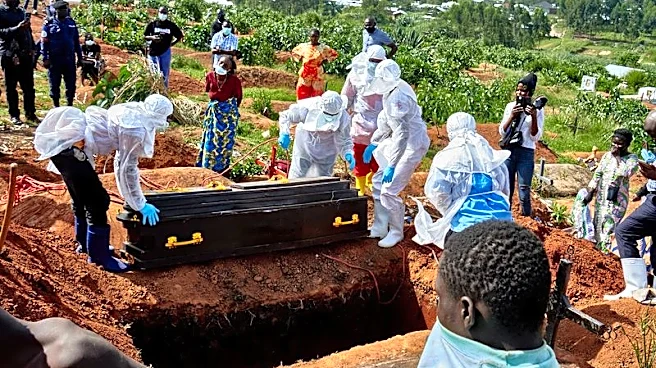
The outbreak in the DRC raises broader questions about global health security and the effectiveness of international aid strategies. The situation underscores the ethical responsibility of wealthier nations to support health crises in less developed regions. It also highlights the need for improved global health infrastructure and preparedness to prevent future outbreaks from reaching such critical levels. The cultural dimensions, such as local burial practices conflicting with health measures, illustrate the complex interplay between health interventions and community traditions.