



What's Happening?
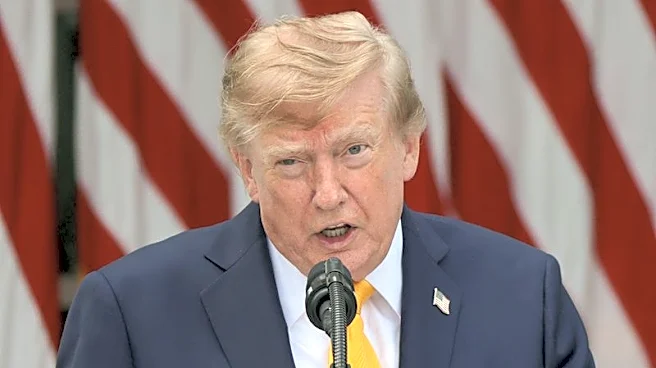
President Trump has submitted a civilian nuclear agreement with Saudi Arabia to Congress. This pact would permit U.S. companies to export civilian nuclear technology to Saudi Arabia. A key condition for this agreement to take effect is Saudi Arabia's
entry into the Abraham Accords, which would establish official diplomatic ties with Israel. This marks a shift from the administration's previous stance, which suggested the nuclear deal and normalization could proceed independently. The agreement was reached in July, and the condition linking it to the Abraham Accords was clarified by President Trump days after its negotiation. Congress now has 90 legislative days to review the agreement; if it is not rejected within this period, it will automatically become effective. The Department of Energy submitted the document under the 1954 Atomic Energy Act. Saudi Arabia has historically maintained that normalization with Israel requires a credible path toward Palestinian statehood, a condition that Israel currently opposes.
Why It's Important?
This development is significant for U.S. foreign policy in the Middle East, intertwining critical energy and security interests with regional diplomacy. By conditioning the nuclear deal on Saudi Arabia joining the Abraham Accords, the Trump administration is leveraging a major technological transfer to advance broader peace initiatives in the region. This could potentially reshape alliances and power dynamics, offering a pathway for Saudi Arabia to formally recognize Israel, a long-sought goal for U.S. foreign policy. The agreement could also bolster the U.S. nuclear industry by opening up new export markets. However, it also presents a complex challenge, as Saudi Arabia's traditional stance on Palestinian statehood conflicts with Israel's current position, making the condition difficult to meet. The outcome will influence regional stability, U.S. influence, and the future of the Abraham Accords, potentially setting a precedent for future diplomatic engagements in the Middle East.
What's Next?
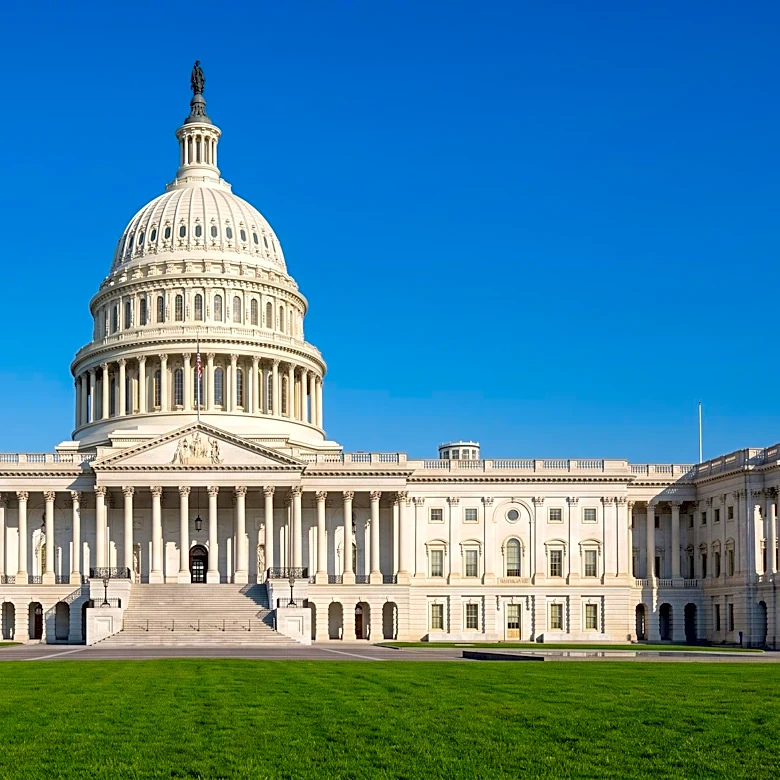
Congress will now review the civilian nuclear agreement over the next 90 legislative days. During this period, members can choose to reject the agreement. If Congress does not reject it within the specified timeframe, the pact will automatically take effect. Should Congress reject the agreement, President Trump retains the option to veto the resolution. Overriding a presidential veto would require a two-thirds majority vote in both the House of Representatives and the Senate, where President Trump's Republican Party currently holds narrow majorities. The diplomatic efforts to encourage Saudi Arabia to join the Abraham Accords will likely intensify, with potential negotiations focusing on how to reconcile Saudi Arabia's demand for a credible path to Palestinian statehood with Israel's opposition to it. The U.S. administration will likely engage with both Saudi and Israeli officials to navigate these complex conditions.
Beyond the Headlines
The linkage of a civilian nuclear deal to diplomatic recognition of Israel carries profound implications beyond immediate policy. Ethically, it raises questions about the use of advanced technology as a bargaining chip in peace negotiations, particularly concerning a region with historical tensions and ongoing conflicts. Legally, the 1954 Atomic Energy Act provides the framework for such agreements, but the specific conditions imposed by the executive branch could set new precedents for future international technology transfers. Culturally, the potential for Saudi Arabia to join the Abraham Accords could significantly alter regional perceptions and foster greater inter-state cooperation, but it also risks alienating segments of the Arab world that prioritize Palestinian statehood. The long-term shift could see a more integrated Middle East, but also one where the U.S. plays an even more central role in brokering complex, multi-faceted agreements that blend security, economic, and political objectives.