



What's Happening?
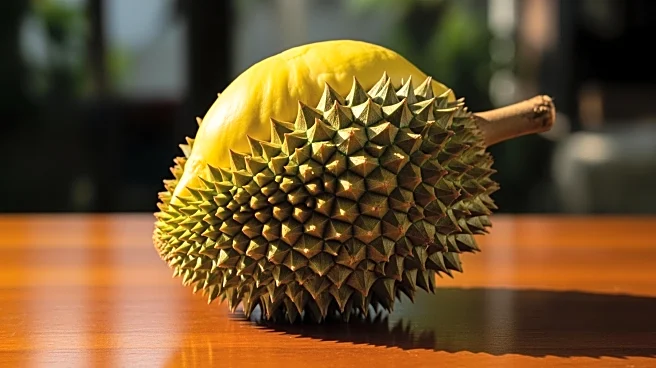
China's growing appetite for durians is reshaping agricultural practices in Southeast Asia, particularly in Malaysia. The town of Raub has become a hub for durian production, driven by China's demand for the fruit, which is considered a luxury item. The Musang
King variety, known for its rich flavor, is highly sought after in China, leading to a shift from oil palm cultivation to durian farming. This economic transformation is supported by China's infrastructure investments, such as the China-Laos Railway, which facilitates the transport of durians. However, this demand has also led to food safety concerns and land disputes in the region.
Why It's Important?
China's demand for durians has significant implications for Southeast Asian economies, particularly in terms of agricultural priorities and trade relations. The shift towards durian farming reflects broader economic trends influenced by consumer preferences in China. This demand has the potential to boost local economies but also poses challenges such as food safety issues and environmental concerns. The reliance on a single crop can lead to vulnerabilities in the agricultural sector, affecting global commodity prices and local land use policies. The situation highlights the interconnectedness of global markets and the impact of consumer trends on regional economies.
What's Next?
As China's demand for durians continues to grow, Southeast Asian countries may further adjust their agricultural strategies to capitalize on this trend. However, they must also address the challenges associated with monoculture farming and ensure sustainable practices. The ongoing land disputes in Malaysia could lead to policy changes regarding land use and farming rights. Additionally, China's efforts to achieve 'durian freedom' by increasing domestic production in Hainan could alter the dynamics of the durian supply chain, potentially reducing reliance on imports from Southeast Asia.