
What's Happening?
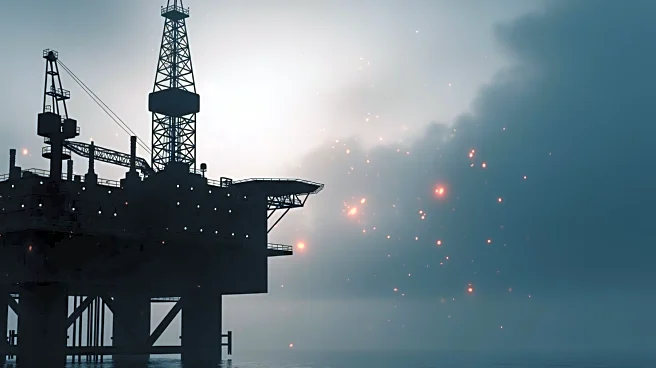
Ukraine has launched its first strike on Russian oil operations in the Caspian Sea, targeting the Lukoil platform. The attack, carried out by Ukraine's Alpha Special Operations Center, involved long-range
drones and resulted in multiple impacts on the Filanovsky platform. This platform is the largest in the Caspian region, and the strike has reportedly halted production at 20 wells. The operation is part of Ukraine's broader strategy to disrupt Russia's oil industry, which is a significant source of revenue for funding the war. While Russian authorities have not confirmed the attack, the Ukrainian side claims it is part of ongoing efforts to weaken Russia's economic capabilities.
Why It's Important?
The strike on the Caspian Sea marks a significant escalation in Ukraine's efforts to target Russia's oil infrastructure. By disrupting oil production, Ukraine aims to inflict economic damage on Russia, which relies heavily on oil revenues. This development could have broader implications for global energy markets, potentially affecting oil prices and supply chains. The use of long-range drones also highlights the evolving nature of warfare, with technology playing a crucial role in modern conflicts. The attack underscores the ongoing tensions between Ukraine and Russia and the challenges in reaching a peaceful resolution.
What's Next?
The strike on the Caspian Sea is likely to provoke a response from Russia, which may retaliate with its own military actions. The international community will be closely monitoring the situation for any signs of escalation. The attack could also impact the ongoing peace negotiations, as it highlights the complexities of reaching a comprehensive agreement. Ukraine's continued focus on targeting Russian oil infrastructure suggests that further strikes may occur, potentially leading to increased tensions. The situation remains fluid, and the outcome will depend on the actions of both Ukraine and Russia in the coming weeks.