






What's Happening?
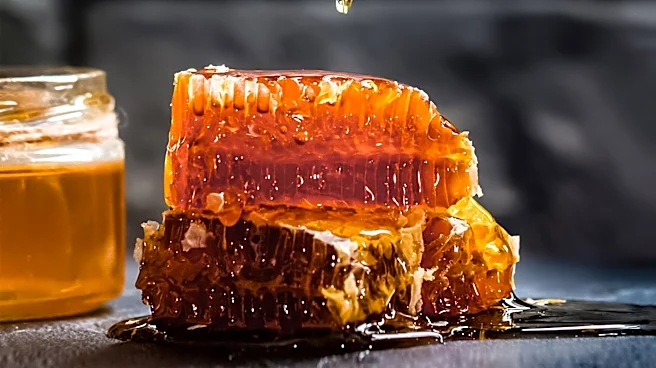
Archaeologists have discovered a jar of honey sealed inside an Egyptian tomb dating back to around 1000 BCE, which was found to be still edible when opened in the 20th century. This discovery highlights honey's unique preservative qualities, attributed
to its low water content, natural hydrogen peroxide, and acidic pH, which create an environment hostile to microbial life. The honey's preservation is contrasted with other ancient foods like grains and dried fish, which degrade over time. The chemistry of honey, involving enzymes added by bees, ensures its longevity, making it one of the most durable food substances known.
Why It's Important?
The discovery underscores honey's potential as a natural preservative, which could have implications for modern food storage and preservation techniques. Its ability to remain edible over millennia highlights the effectiveness of natural preservation methods, which could inspire new approaches in food technology. Additionally, the findings contribute to our understanding of ancient Egyptian burial practices and the value placed on honey as a food source. This discovery also emphasizes the importance of bees in creating a naturally preserved food product, which could influence discussions on bee conservation and the ecological significance of pollinators.