




What's Happening?
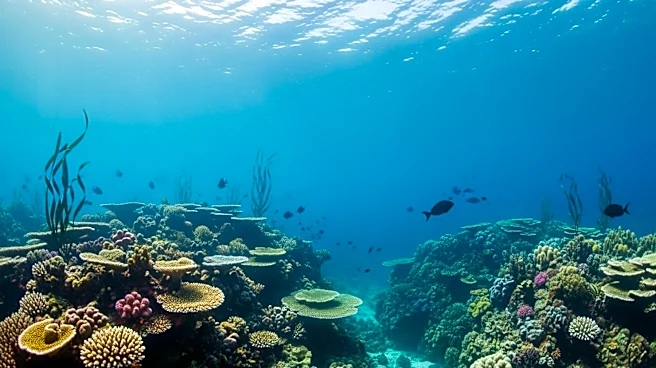
Cape Town's underwater world has been prominently featured on the cover of TIME magazine's Ocean Issue. The cover image showcases the Great African Seaforest, a vast underwater kelp forest that extends along the Cape Peninsula and north towards Namibia.
Captured by Cape Town-based photographer and freediver Helen Walne, the image accompanies an article titled 'The Power Hiding in Underwater Forests' by conservation researcher Tatjana Baleta. The article highlights the ecological significance of the kelp forest, which supports a diverse range of marine life including sharks, seals, and various invertebrates. The feature also discusses the threats posed to these ecosystems by marine heatwaves, coastal development, and pollution. The Great African Seaforest gained international attention through the Oscar-winning documentary 'My Octopus Teacher', which showcased the beauty and ecological importance of this marine habitat.
Why It's Important?
The inclusion of Cape Town's underwater world in TIME magazine underscores the global significance of marine biodiversity and the urgent need to protect these ecosystems. Kelp forests like the Great African Seaforest play a crucial role in sustaining marine life and supporting coastal fisheries, which are vital for local economies. The feature draws attention to the environmental challenges facing these habitats, such as climate change and human activities, which threaten their survival. By highlighting these issues, the article aims to raise awareness and encourage conservation efforts to preserve these natural wonders. The recognition by a major publication like TIME can help galvanize support for initiatives aimed at protecting marine environments, benefiting both local communities and global biodiversity.
What's Next?
The spotlight on the Great African Seaforest may lead to increased interest and investment in marine conservation efforts in the region. Organizations like the Sea Change Project and Save Our Seas Foundation, which are already working to protect these ecosystems, may receive more support and funding. Additionally, the feature could inspire further research into the ecological roles of kelp forests and the development of strategies to mitigate the impacts of climate change and pollution. As awareness grows, there may be increased advocacy for policy changes to protect marine environments, both locally and internationally. The attention could also boost eco-tourism in the area, providing economic benefits while promoting sustainable practices.
Beyond the Headlines
The feature on Cape Town's underwater world highlights the often-overlooked importance of marine ecosystems in global biodiversity. Kelp forests are not only vital habitats for marine life but also play a role in carbon sequestration, helping to mitigate climate change. The article serves as a reminder of the interconnectedness of ecosystems and the need for holistic approaches to environmental conservation. It also emphasizes the cultural and aesthetic value of these natural wonders, which can inspire a deeper appreciation and commitment to preserving the planet's biodiversity. The recognition of the Great African Seaforest by TIME magazine may encourage similar efforts to document and protect other critical marine habitats worldwide.