
What's Happening?
China Green Development Investment Group (CGDG) has announced a new liquid air energy storage project in the Gobi Desert, marking a significant step in renewable energy storage technology. The facility,
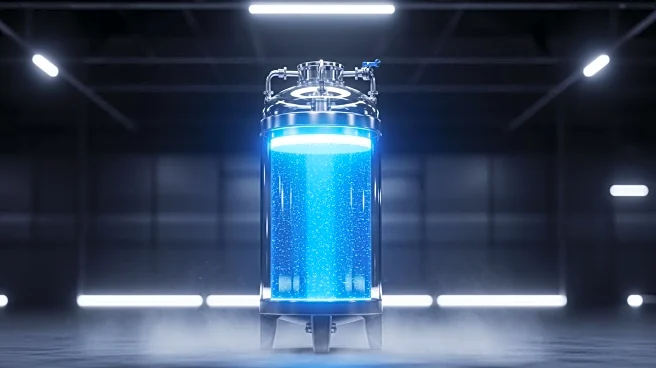
with a capacity of 60 megawatts and 10 hours of storage, utilizes surplus solar power to compress and liquefy air, which is then stored in cryogenic tanks. When energy demand peaks, the stored air is converted back into gas to generate electricity. This project aims to demonstrate the viability of liquid air as a long-duration energy storage solution, offering an alternative to lithium-ion batteries and pumped hydropower.
Why It's Important?
The development of liquid air energy storage represents a potential breakthrough in renewable energy technology, addressing the limitations of current storage solutions. By providing longer storage durations and reducing reliance on geopolitically sensitive supply chains, this technology could enhance energy security and support the transition to renewable energy. The project in China could set a precedent for similar initiatives globally, influencing energy policies and investment strategies. If successful, it may lead to increased adoption of liquid air storage, contributing to more resilient and sustainable energy systems.
What's Next?
The success of the CGDG project could spur further investment and development in liquid air energy storage. As the technology matures, it may attract interest from other countries seeking to enhance their renewable energy capabilities. The project's outcomes will likely be closely monitored by industry stakeholders and policymakers, potentially influencing future energy storage strategies. Additionally, advancements in this field could lead to collaborations between countries and companies, fostering innovation and accelerating the deployment of sustainable energy solutions.