






What's Happening?
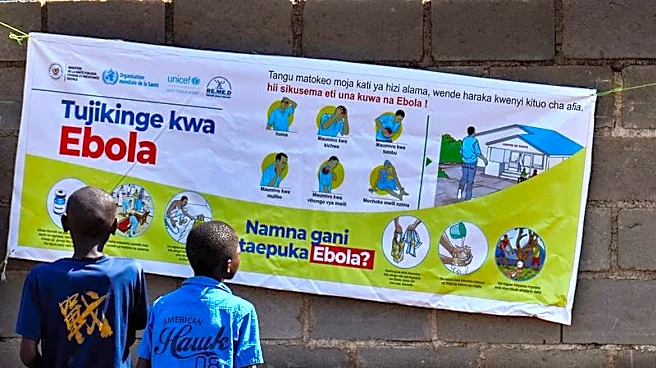
Uganda has closed its western border with the Democratic Republic of Congo in response to an Ebola outbreak in the eastern Ituri province of Congo. This decision, made on May 28, aims to prevent the spread of the virus into Uganda. The closure has significantly
affected traders, particularly at the Mpondwe border post, where goods such as plantains and fish are stuck in transit. Traders like Leah Masika and Sylvia Asiimwe express frustration as their perishable goods risk spoiling due to the halted movement of cargo trucks. The World Health Organization has declared the outbreak a public health emergency but advised against border closures, although it acknowledges the high risk of contagion to neighboring countries. Uganda has confirmed 15 Ebola cases linked to the outbreak, prompting authorities to tighten border measures further.
Why It's Important?
The border closure between Uganda and Congo highlights the challenges of balancing public health safety with economic activity. The decision to close the border affects traders who rely on cross-border commerce, potentially leading to significant financial losses. This situation underscores the broader economic impact of health crises on local economies, particularly in regions where informal trade is a major livelihood source. The closure also raises questions about the effectiveness of such measures in controlling disease spread, as the World Health Organization advises against them. The situation in Uganda serves as a case study for other nations facing similar public health threats, illustrating the need for coordinated international responses and the potential economic fallout of health-related border restrictions.
What's Next?
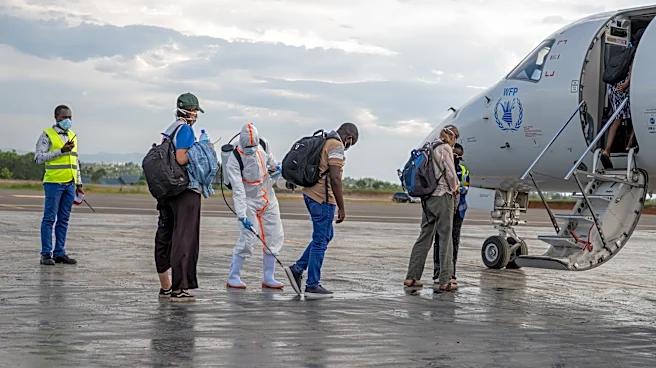
Ugandan authorities are likely to implement more stringent measures to control the movement of goods and people across the border. A local Ebola task force is expected to devise a systematic approach to allow cargo trucks into the country while minimizing the risk of Ebola transmission. This could involve enhanced screening and monitoring at border points. Traders are hopeful for a resolution that allows them to continue their business operations without compromising public health. The ongoing situation will require careful management to balance economic needs with health precautions, and the response may influence future policies on handling cross-border health emergencies.
Beyond the Headlines
The closure of the Uganda-Congo border due to Ebola fears highlights deeper issues related to public health infrastructure and preparedness in the region. The reliance on informal trade routes and the kinship ties between communities on both sides of the border complicate efforts to control disease spread. This situation also raises ethical questions about the rights of traders and the economic impact on communities dependent on cross-border trade. Long-term, the outbreak could prompt discussions on improving health surveillance and response systems in Africa, as well as the need for international support in managing such crises.