




What's Happening?
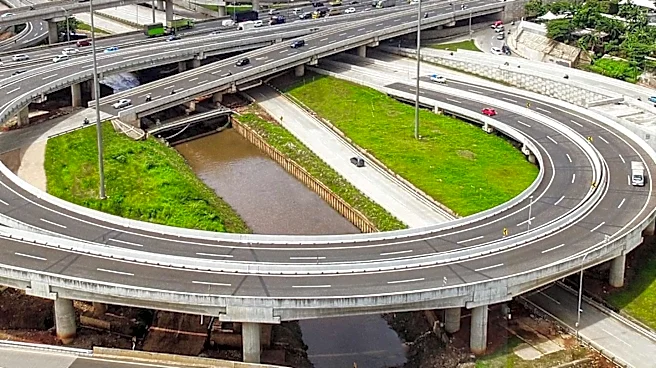
Norman, Oklahoma, is actively working to enhance the safety and accessibility of its shared travel corridors, focusing on creating more people-centered infrastructure. This initiative comes as residents increasingly seek diverse transportation options
beyond cars and trucks, with a strong emphasis on feeling safe while traveling. Freese and Nichols transportation engineers and planners are instrumental in these efforts, designing infrastructure that promotes safe road sharing among cyclists, pedestrians, and motorists. An example of this is the expanded trail on Constitution Street in Norman, which has improved safety for walkers and cyclists commuting between the University of Oklahoma campus and nearby residential areas. Civil Engineering Magazine online has highlighted projects in Norman, along with Dallas and Richardson, Texas, showcasing how measures like medians, shared-use paths, protected intersections, and road diets can expand mobility while simultaneously improving safety for all road users.
Why It's Important?
The push for safer and more people-centered travel corridors in Norman reflects a growing national trend towards urban planning that prioritizes active transportation and multimodal options. This is important for several reasons: it enhances public health by encouraging walking and cycling, reduces traffic congestion and carbon emissions, and improves the overall quality of life for residents. By making these corridors safer, Norman aims to increase the number of people who choose to walk or bike, thereby reducing reliance on single-occupancy vehicles. This shift can lead to a more vibrant and connected community, fostering local businesses and improving accessibility for all demographics. The investment in such infrastructure also signals a forward-thinking approach to urban development, aligning with contemporary environmental and social sustainability goals.
What's Next?
Norman's ongoing efforts to improve shared travel corridors are expected to continue, with further implementation of thoughtful infrastructure projects. The success of initiatives like the Constitution Street trail may lead to the replication of similar designs in other parts of the city. The insights from experts like Kayla Burd, Kevin St. Jacques, Todd Buckingham, and Martin Rutter, as highlighted in Civil Engineering Magazine, will likely inform future planning and design decisions. Communities across the U.S. are increasingly adopting similar strategies, suggesting that Norman's progress could serve as a model for other cities looking to enhance pedestrian and cyclist safety and promote multimodal transportation. The focus will remain on continuous improvement and adaptation to meet the evolving transportation needs and safety concerns of the community.
Beyond the Headlines
The development of safer, people-centered travel corridors in Norman has deeper implications beyond immediate safety and convenience. It represents a paradigm shift in urban planning, moving away from car-centric design towards a more holistic approach that values human scale and community interaction. This shift can foster a stronger sense of place and belonging, as public spaces become more accessible and enjoyable for everyone. Ethically, it addresses issues of equity and accessibility, ensuring that transportation options are available and safe for individuals regardless of their ability to drive or own a car. Long-term, these infrastructure changes can contribute to a more resilient urban environment, less dependent on fossil fuels and more adaptable to future challenges like climate change and population growth. It's a move towards creating cities that are not just functional, but truly livable.