





What's Happening?
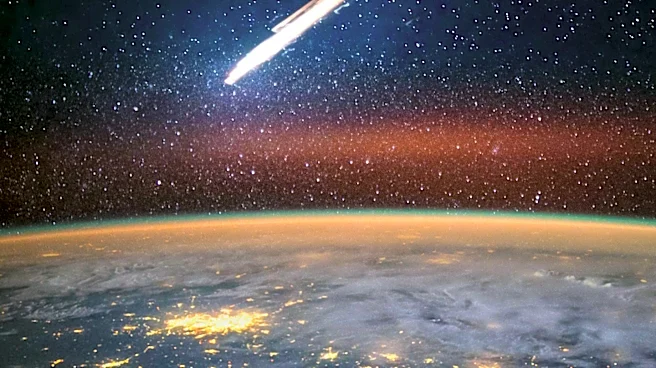
Early on Sunday morning, residents of southeast Louisiana witnessed a spectacular meteor event. Around 5:00 a.m., a bright flash of light, described as a large, vibrant green ball with fire trailing behind it, was seen streaking across the pre-dawn sky.
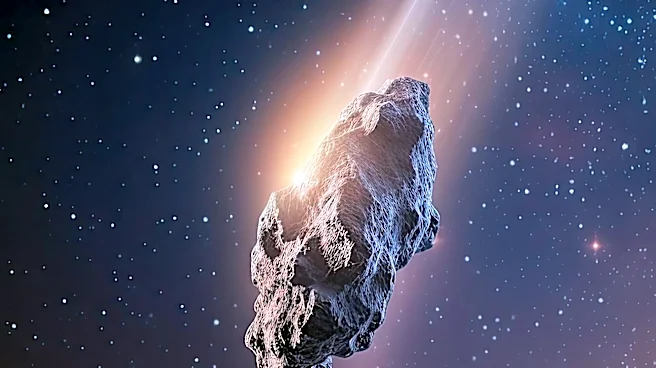
This phenomenon, known as a fireball, occurs when a meteoroid enters Earth's atmosphere at high speeds, creating a bright streak of light. If the fireball ends with a dramatic explosion, it is termed a bolide. The intense heat from atmospheric friction causes the meteoroid to fragment, and while most vaporize, some fragments, known as meteorites, may reach the ground.
Why It's Important?
Meteor events like this one are significant for both scientific research and public interest. They provide valuable data for astronomers studying the composition and behavior of meteoroids as they enter Earth's atmosphere. Understanding these events can help improve predictions and tracking of larger objects that could pose a threat to Earth. Additionally, such events capture public imagination and interest in space science, potentially inspiring future generations of scientists and astronomers. The bright flash and subsequent explosion also serve as a reminder of the dynamic and ever-changing nature of our solar system.
What's Next?
Astronomical experts will analyze data from the event to determine if any meteorite fragments survived the atmospheric entry and landed on Earth. This analysis will help classify the meteor and provide insights into its origin and composition. The findings will be shared with the scientific community and the public, contributing to ongoing research in planetary science. Additionally, local residents and amateur astronomers may participate in searches for meteorite fragments, adding to the collaborative nature of space science research.