





What's Happening?
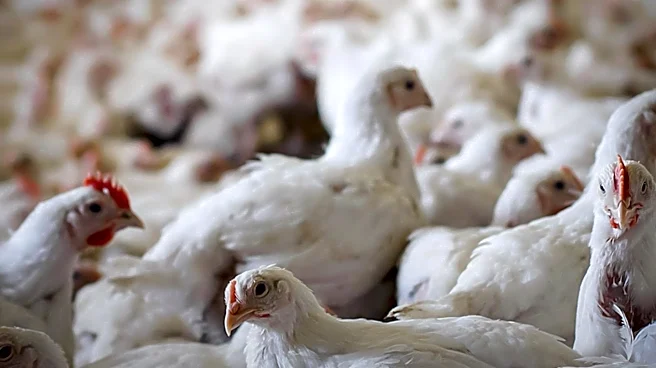
The U.S. is witnessing a debate over the use of genetically engineered animals in factory farms. These animals are designed to withstand harsh conditions typical of industrial agriculture, such as overcrowding and disease. Proponents argue that genetic engineering
can address challenges in livestock production, but critics warn it perpetuates harmful farming practices. The 'Save Our Bacon Act' in the Farm Bill, which could undermine state animal welfare laws, is also under scrutiny.
Why It's Important?
Genetically engineered animals represent a significant shift in agricultural practices, raising ethical and environmental concerns. While they may offer short-term solutions to production challenges, they do not address the root causes of pollution and animal suffering in factory farms. The debate highlights the need for sustainable farming practices that prioritize animal welfare and environmental health. The outcome of this debate could influence future agricultural policies and the direction of U.S. food systems.
What's Next?
As the Farm Bill progresses, stakeholders will continue to debate the role of genetically engineered animals in agriculture. Lawmakers face pressure to balance industry interests with public health and environmental concerns. The decision on the 'Save Our Bacon Act' will be pivotal, potentially affecting state authority over agricultural standards. The ongoing discussion may lead to increased support for sustainable farming practices and stricter regulations on genetic engineering.
Beyond the Headlines
The use of genetically engineered animals raises questions about the long-term impacts on biodiversity and ecosystem health. There are concerns about the potential for unintended genetic mutations and the ethical implications of altering animal genetics for human benefit. This issue also reflects broader societal debates about the role of technology in addressing environmental challenges and the need for transparent regulatory processes.