





What's Happening?
Faith communities in Northern Virginia are urgently calling on the U.S. government to extend and redesignate Temporary Protected Status (TPS) for over 30,000 residents in the region, including thousands of Salvadorans, whose status is set to expire on September
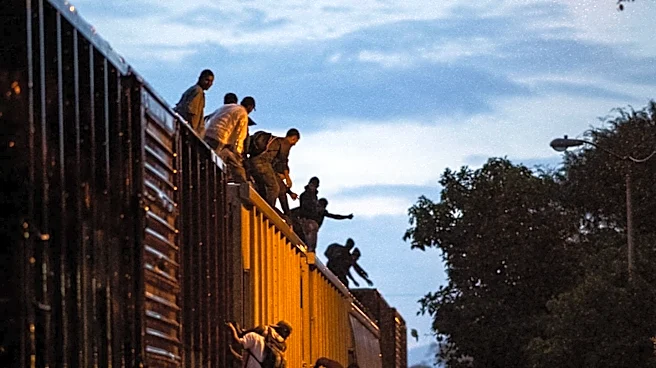
9, 2026. This petition, initiated by Kingstowne Communion United Methodist Church, emphasizes the theological, humanitarian, and economic implications of allowing TPS to lapse. These individuals have been integral to their communities for decades, working in essential sectors such as healthcare, food production, construction, childcare, and eldercare. The petition highlights that ending TPS would lead to family separation, economic disruption, and force many into unlawful residency or back to dangerous countries, drawing parallels to the negative impacts observed in other immigrant communities from Haiti, Venezuela, Honduras, and Ethiopia.
Why It's Important?
The potential expiration of TPS for over 30,000 individuals in Northern Virginia carries significant societal and economic ramifications for the U.S. The affected individuals are deeply integrated into the local economy, contributing taxes, working in critical industries, and owning homes and businesses. Their sudden removal would create a substantial labor void in sectors already facing shortages, such as healthcare and childcare, potentially disrupting essential services. Economically, local tax bases would shrink, small businesses would suffer, and financial commitments like mortgages and car loans held by TPS families would be jeopardized. Furthermore, the humanitarian aspect, involving the potential separation of families with U.S.-citizen children and the forced return to countries still marked by instability, poses a moral challenge to American values and commitments to human dignity. This situation underscores the complex interplay between immigration policy, economic stability, and community well-being in the United States.
What's Next?
The petition urges immediate action from the Administration, Congress, and relevant secretaries to extend and redesignate TPS. Specifically, it calls for the immediate extension of TPS for all current holders whose status expires around September 9, 2026, including Salvadorans, to prevent loss of status due to delays or political gridlock. It also requests a reassessment of conditions in affected countries, explicitly including El Salvador, to redesignate TPS where conflict, disaster, or instability persist. Additionally, the petition advocates for simplifying the renewal process, reducing fees, providing multilingual information, adequately staffing USCIS, and preventing gaps in work permits and driver's licenses. Looking ahead, the faith communities are pushing for administrative and legislative measures that offer long-term stability and a path to permanent status for long-resident TPS holders, with the full backing of Virginia's congressional delegation. The outcome will depend on political will and legislative action in the coming months.
Beyond the Headlines
The call to extend TPS in Northern Virginia delves into the ethical and moral fabric of American society, questioning who is considered a 'neighbor' and how the nation treats its most vulnerable. The petition frames the issue not merely as a technical immigration matter but as a theological, humanitarian, and economic test. It highlights the long-term 'temporary' status that many TPS holders, particularly Salvadorans, have endured for decades, leading to established lives, families, and contributions within U.S. communities. The potential for mass eviction and family separation challenges the nation's commitment to compassion and stability. This situation also brings to light the economic dependency on immigrant labor in various sectors and the potential for significant disruption if these workers are removed. The debate over TPS reflects a broader national conversation about immigration reform, the integration of immigrant communities, and the balance between legal frameworks and humanitarian principles.