



What's Happening?
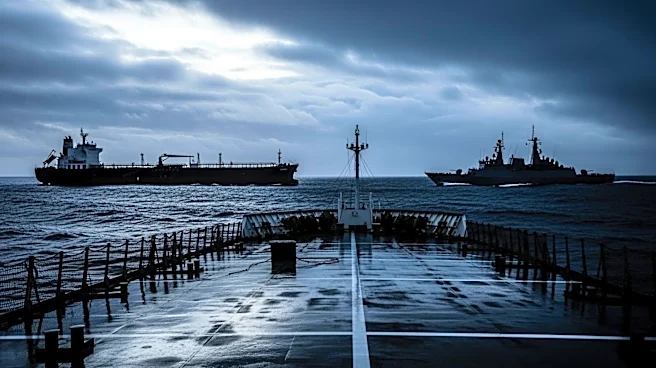
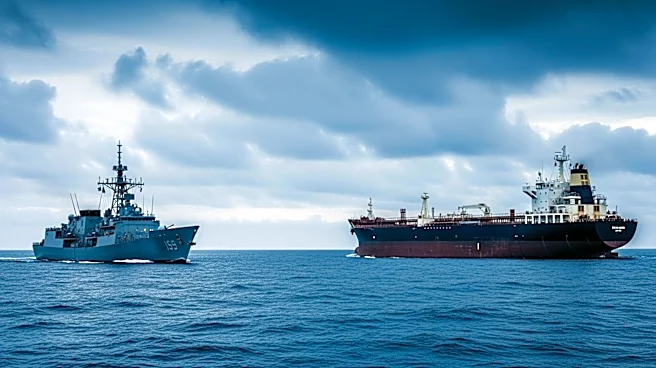
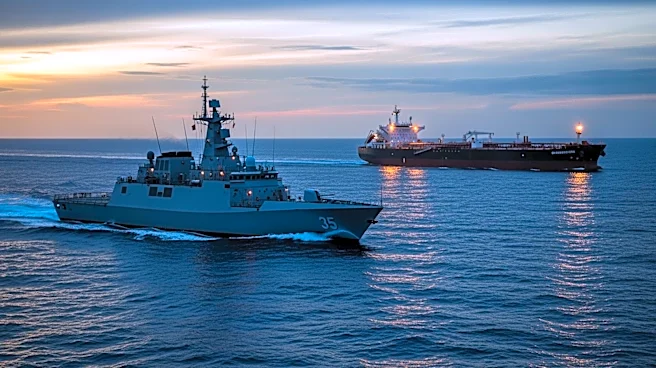
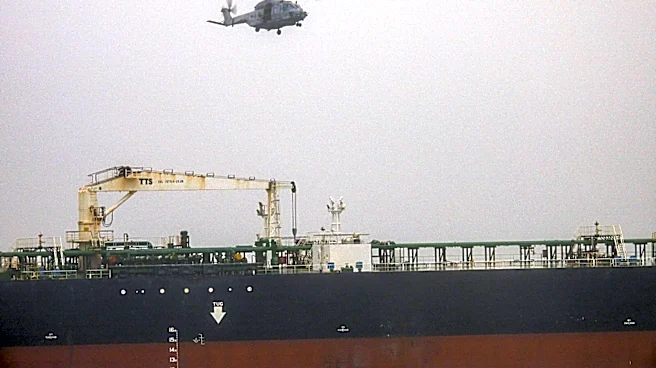
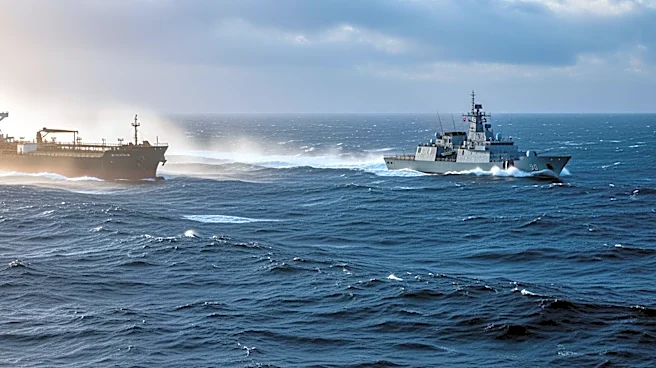
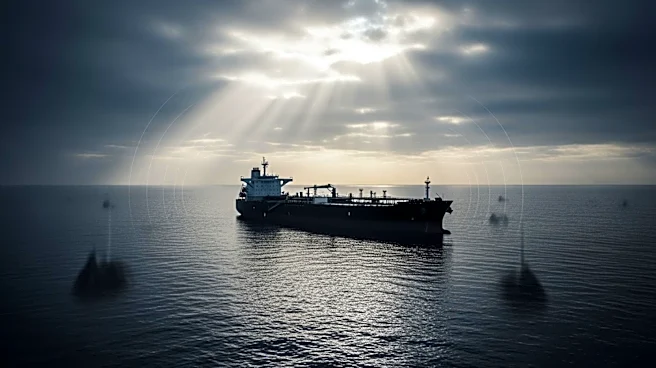
France's navy has intercepted a Russian-linked oil tanker, the Tagor, in the Atlantic Ocean, ordering it to head for the French mainland. The tanker, suspected of flying under a false flag, was intercepted with British support. This action is part of a broader
European strategy to obstruct vessels that help fund Russia's war efforts in Ukraine. The Tagor, sailing from Russia's Arctic port of Murmansk, was found to be flying the flag of Madagascar. French President Emmanuel Macron emphasized the importance of enforcing international sanctions to prevent the circumvention of laws and the financing of Russia's military activities. The Kremlin has condemned the interception as illegal, likening it to international piracy.
Why It's Important?
The interception of the Tagor highlights the ongoing geopolitical tensions between Europe and Russia, particularly in the context of the Ukraine conflict. By enforcing sanctions and intercepting vessels, France and its allies aim to limit Russia's ability to generate revenue from oil exports, which are crucial for funding its military operations. This incident underscores the challenges of enforcing international sanctions, as Russia continues to adapt and find ways to circumvent restrictions. The situation also raises questions about the effectiveness of current sanctions and the potential for further escalation in maritime security measures. For the global oil market, these actions could impact supply routes and pricing, especially if similar interceptions become more frequent.
What's Next?
France and its European allies are likely to continue their efforts to enforce sanctions against Russia, potentially leading to more interceptions of vessels linked to the Russian oil trade. The Kremlin's response to these actions will be closely watched, as it may influence future diplomatic and military strategies. Additionally, the international community will need to address the legal and ethical implications of such interceptions, balancing the enforcement of sanctions with the principles of international maritime law. The ongoing geopolitical tensions could also prompt further discussions within the EU and NATO regarding collective security measures and economic strategies.