


What's Happening?
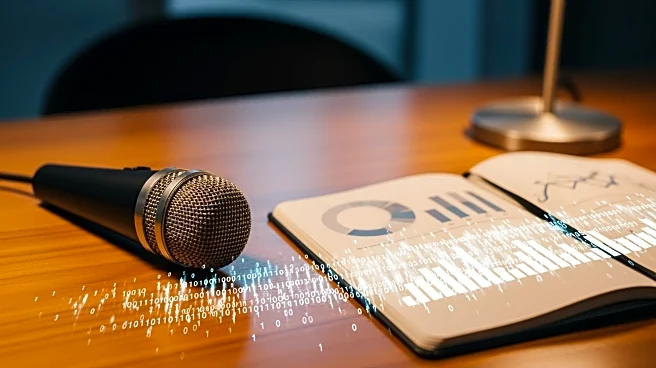
KUOW, Seattle's NPR news station, has launched a new podcast titled 'Control F' that delves into the various ways data influences daily life. The podcast is co-hosted by Clare McGrane, a senior producer at KUOW, and Teo Popescu, a design, graphics, and data editor.
Phyllis Fletcher serves as the showrunner and editor. Each episode of 'Control F' will explore different topics by examining research, algorithms, and assumptions to provide fresh insights into modern life. The podcast aims to address questions such as the accuracy of weather forecasts, the definition and impact of the U.S. poverty line, and how landlords determine pet policies in rental agreements. The inaugural episode focuses on the evolution of credit scores and the implications of changes in this measurement system. The podcast seeks to engage both new listeners and regular KUOW consumers by addressing big data questions and providing answers.
Why It's Important?
The launch of 'Control F' is significant as it addresses the growing influence of data in decision-making processes across various sectors. By exploring how data shapes policies and personal decisions, the podcast aims to demystify complex data-driven topics for the general public. This initiative is particularly relevant in an era where data is increasingly used to justify policies and business strategies, yet remains inaccessible or difficult to interpret for many. By providing insights into how data affects everyday life, 'Control F' could empower listeners to better understand and question the data-driven decisions that impact them. This could lead to a more informed public, capable of engaging in discussions about data's role in society and advocating for transparency and accountability in data usage.
What's Next?
As 'Control F' continues to release episodes, it is expected to cover a wide range of topics that will further explore the intersection of data and daily life. The podcast may attract a diverse audience interested in understanding the nuances of data-driven decisions. Future episodes could potentially influence public discourse on data transparency and the ethical use of data in policy-making. Additionally, the podcast might inspire other media outlets to create similar content, contributing to a broader movement towards data literacy and informed public engagement. Stakeholders such as policymakers, educators, and data scientists may also take interest in the podcast's findings, potentially leading to collaborations or discussions on improving data accessibility and interpretation.