




What's Happening?
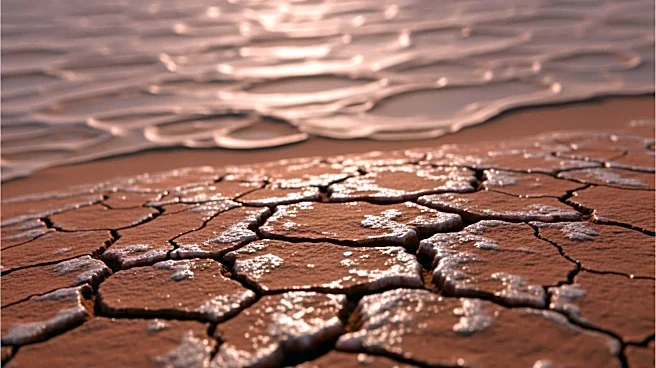
Recent research suggests that Mars may have once had a vast ocean, covering one-third of the planet, which evaporated billions of years ago. This hypothesis is supported by the discovery of a 'coastal shelf,' a flat band of land that could indicate a former
shoreline. The study, published in Nature, used computer simulations to identify geological features on Mars similar to Earth's continental shelves. While previous evidence of river networks and lakebeds indicated a watery past, the existence of a large ocean remains debated. The discovery of this coastal shelf could provide crucial evidence in this ongoing scientific discussion.
Why It's Important?
Confirming the existence of an ancient ocean on Mars would significantly enhance our understanding of the planet's history and its potential to have supported life. It would suggest that Mars once had a climate more similar to Earth's, with stable liquid water, which is a key factor for habitability. This discovery could also inform future missions and research, guiding scientists in their search for signs of past life on Mars. The implications extend to our understanding of planetary evolution and the conditions necessary for life, influencing how we search for life beyond Earth.
What's Next?
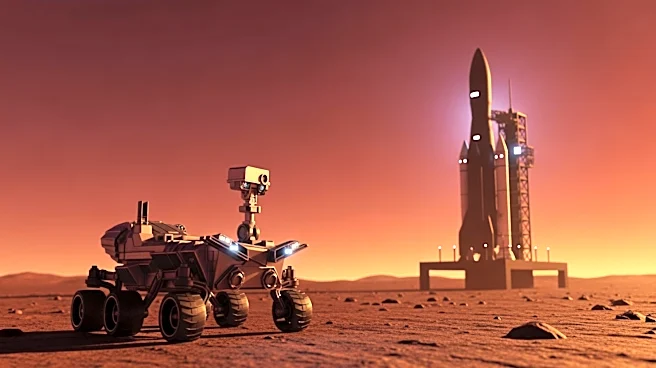
The European Space Agency's Rosalind Franklin rover, set to launch in 2028, will explore Mars' northern hemisphere, potentially providing direct evidence of the coastal shelf. This mission could confirm the presence of an ancient ocean, resolving a long-standing debate in planetary science. The findings from this mission will be crucial in shaping future exploration strategies and understanding Mars' geological history. As scientists continue to analyze data from current and future missions, the debate over Mars' watery past will likely intensify, with significant implications for our understanding of the planet.