








What's Happening?
Rep. James Walkinshaw, a Democrat from Virginia, has expressed dissatisfaction with the recent passage of a $70 billion immigration enforcement funding bill by the Republican-controlled House. The bill, which significantly increases resources for Immigration
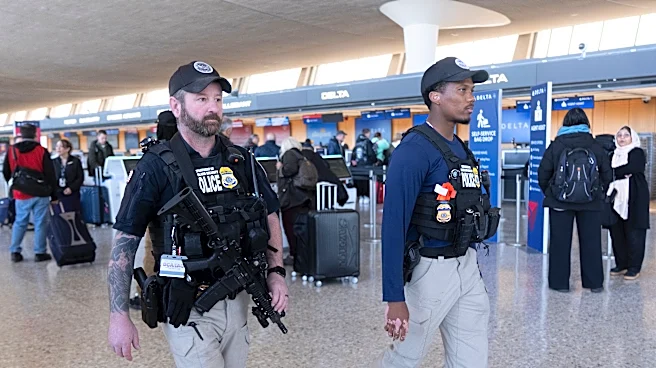
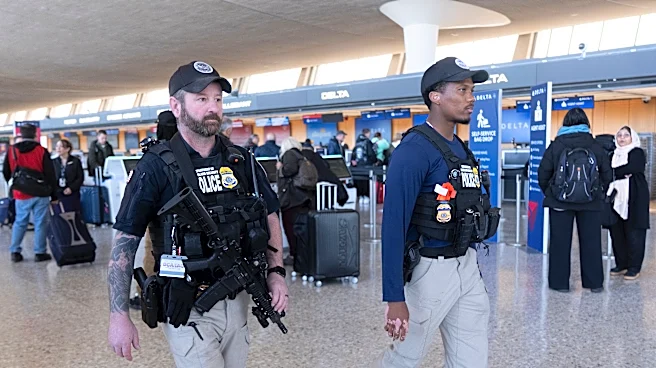
and Customs Enforcement (ICE) and Border Patrol, was passed without incorporating proposed reforms from Democrats. These reforms included limits on face coverings, body camera requirements, and clearer use-of-force standards. Walkinshaw, who serves on the House Homeland Security and Oversight committees, emphasized that these reforms were intended to ensure that ICE and Customs and Border Protection (CBP) operate with the same accountability as other law enforcement agencies. However, these proposals were rejected by Republicans, led by Stephen Miller at the White House.
Why It's Important?
The exclusion of these reforms from the funding bill highlights ongoing tensions between Democrats and Republicans over immigration enforcement policies. The Democrats' push for reforms reflects a broader concern about accountability and transparency within ICE and CBP, agencies that have faced criticism for their enforcement practices. The passage of the bill without these reforms suggests a continuation of current practices, which may lead to further scrutiny and debate. This development is significant as it underscores the ideological divide between the two parties on immigration issues, potentially affecting public perception and future legislative efforts.
What's Next?
Democrats, according to Walkinshaw, plan to continue using oversight tools such as committee hearings, investigations by the Government Accountability Office, and court challenges to address their concerns with ICE and CBP. These actions indicate that the debate over immigration enforcement practices is likely to persist, with Democrats seeking to hold these agencies accountable through alternative means. The ongoing scrutiny may lead to further legislative proposals or adjustments in enforcement practices, depending on the political climate and public pressure.