



What's Happening?
Conservative author Mollie Hemingway has released a biography of Justice Samuel Alito, which includes details about his financial interests. According to Hemingway's book, Alito's wife, Martha-Ann, inherited individual stocks from her parents, which she
is disinclined to sell due to both financial and sentimental value. This information comes to light amidst ongoing scrutiny of Justice Alito's recusal practices, particularly concerning a key climate change case. Alito recently decided to recuse himself from the 'Suncor v. Boulder' case, despite previously indicating that recusal was not required. While he does not own stock in the specific companies involved in that case (ExxonMobil and Suncor), he does hold stock in other fossil fuel companies that could be affected by the Supreme Court's decision. Legal experts, such as Arthur Hellman, professor emeritus at the University of Pittsburgh, suggest that Alito's continued ownership of individual corporate stocks will likely lead to further recusal issues and public questioning of the court's ethics.
Why It's Important?
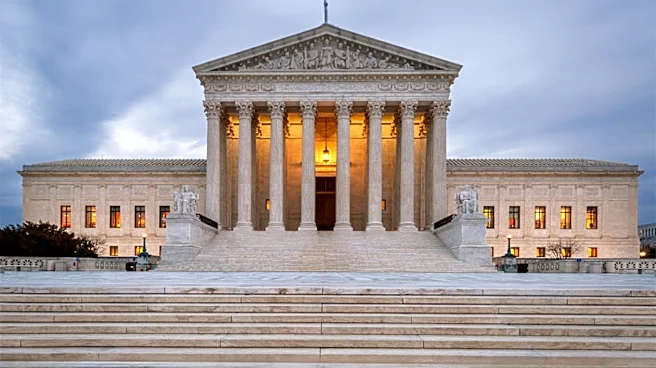
The discussion surrounding Justice Alito's financial holdings and recusal decisions is significant for several reasons. It highlights the ongoing debate about judicial ethics and transparency within the U.S. Supreme Court. The fact that Alito is the only justice with an extensive portfolio of individual stocks in corporations that frequently litigate in federal courts raises questions about potential conflicts of interest. His recusal from the 'Suncor v. Boulder' case, after initial resistance, underscores the pressure on justices to avoid even the appearance of impropriety. A Supreme Court ruling in favor of oil companies in such cases could provide broad immunity from climate change liability, impacting numerous ongoing lawsuits by state and local governments seeking damages for climate-related costs. The situation also brings into focus the effectiveness of the Supreme Court's 2023 code of conduct, which outlines circumstances for recusal but doesn't explicitly prohibit justices from holding individual stocks. This ongoing ethical scrutiny could erode public trust in the judiciary's impartiality.
What's Next?
The recusal of Justice Alito from the 'Suncor v. Boulder' case means the Supreme Court will proceed without his participation in this specific matter. However, the broader implications of his financial interests and recusal practices are likely to continue to be a subject of public and legal discussion. Legal experts like Louis Virelli, a law professor at Stetson University, suggest that the fundamental question of whether Supreme Court justices should hold individual stocks at all needs to be addressed. The ongoing presence of these financial interests could lead to future recusal demands in other cases involving industries in which Alito holds stock, potentially disrupting the court's work, as Alito himself noted in a 2023 memorandum. Watchdog groups and environmental organizations will likely continue to monitor the financial disclosures of justices and advocate for stricter ethical guidelines to prevent perceived conflicts of interest and ensure the court's integrity.
Beyond the Headlines
Beyond the immediate legal and ethical considerations, the situation surrounding Justice Alito's stock holdings touches upon deeper issues of public perception and institutional legitimacy. The 'sentimental value' cited by Mollie Hemingway for Martha-Ann Alito's inherited stocks, while understandable on a personal level, clashes with the expectation of absolute impartiality required of a Supreme Court Justice. This highlights a tension between personal financial autonomy and the stringent ethical demands of high public office. The repeated instances of recusal, and the questions they raise, contribute to a broader narrative of ethical challenges facing the Supreme Court, potentially impacting its standing as an unbiased arbiter of justice. The debate extends beyond individual cases to the structural integrity of the judiciary, prompting a re-evaluation of existing ethical frameworks and the need for clearer, more comprehensive guidelines regarding financial interests for Supreme Court justices.