






What's Happening?
The Australian carbon market is experiencing a significant structural transformation, moving from a voluntary-driven system to one primarily influenced by mandated compliance obligations. This shift is largely due to the reformed Safeguard Mechanism (SGM),
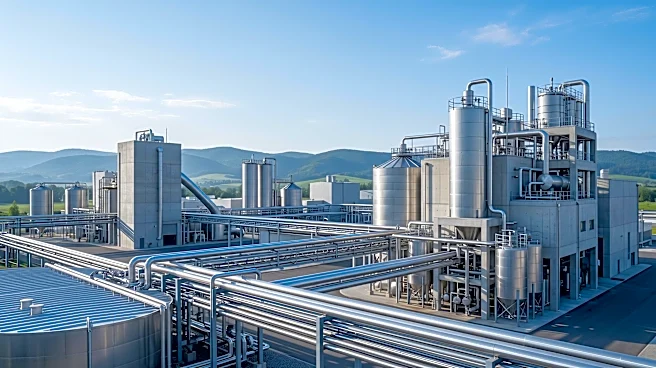
which now covers 208 of Australia’s largest industrial facilities, those emitting over 100,000 tonnes of carbon dioxide equivalent annually. The SGM mandates a 4.9% annual baseline decline through to fiscal year 2030, with post-2030 baseline settings under review and expected to be finalized by July 1, 2027. This regulatory change has elevated Australian Carbon Credit Units (ACCUs) into a core financial risk-management asset for major industrial emitters. In the 2024-25 compliance year, 141 facilities exceeded their baselines by a combined 13.7 million tonnes CO2-e, leading to the surrender of 10.8 million ACCUs to manage the shortfall. While Safeguard Mechanism Credits (SMCs) offer a secondary compliance currency, ACCUs remain the dominant tool for compliance. The market is also seeing a decline in voluntary cancellations, indicating that compliance demand is now the primary driver.
Why It's Important?
This transformation of the Australian carbon market has profound implications for U.S. industries and global climate policy. As Australia, a significant global economy, strengthens its compliance-based carbon market, it sets a precedent that could influence international carbon market development and trade. U.S. companies with operations in Australia or those engaged in international supply chains may face increased compliance costs or new opportunities for carbon credit trading. The emphasis on integrating carbon projects with agricultural operations, offering high-margin revenue streams for landholders, could also inspire similar initiatives in the U.S., promoting sustainable land management and new economic avenues for the agricultural sector. The move away from voluntary commitments towards legally binding requirements in Australia highlights a global trend towards more stringent climate regulations, which could pressure U.S. policymakers and industries to accelerate their decarbonization efforts to remain competitive and avoid potential future carbon border adjustments.
What's Next?
The Australian government is set to review post-2030 baseline settings for the Safeguard Mechanism by July 1, 2027, which independent modeling suggests may need to tighten significantly to meet Australia's ambitious 2035 targets. This upcoming review will be crucial in shaping the long-term trajectory of the Australian carbon market and its impact on industrial emitters. Additionally, the Climate Active program, which underpinned voluntary carbon-neutral claims, is being wound down by July 24, 2026, with credible voluntary action increasingly needing to align with internationally recognized frameworks like the Science Based Targets initiative (SBTi) and the VCMI Claims Code. This shift will require companies to adapt their climate strategies and reporting. The market also faces a looming supply bottleneck for ACCUs, particularly from biological sequestration projects, which have multi-year lead times. This could lead to increased ACCU prices and incentivize direct investment in project origination by compliance buyers to secure long-term supply.
Beyond the Headlines
The structural shift in Australia's carbon market underscores a broader global movement towards institutionalizing climate action through regulatory frameworks rather than relying solely on voluntary commitments. This transition highlights the evolving understanding of climate risk, moving from a corporate social responsibility issue to a core financial and operational imperative. The integration of carbon projects with agricultural practices, offering both environmental benefits and economic incentives for landholders, presents a model for sustainable development that could be replicated globally. This approach not only addresses emissions but also promotes biodiversity, soil health, and regional economic development. The challenges in scaling up ACCU supply, particularly from nature-based solutions, reveal the inherent complexities and lead times involved in transitioning to a low-carbon economy, emphasizing the need for proactive investment and long-term planning by all stakeholders.