






What's Happening?
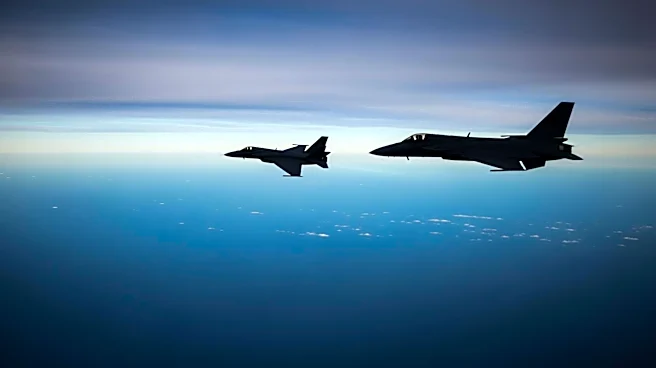
UK defense authorities have reported multiple dangerous interceptions by Russian fighter jets of British Royal Air Force reconnaissance flights over the Black Sea. The incidents involved a Russian Su-35 and Su-27, which engaged in aggressive maneuvers
close to the British aircraft, risking potential collisions. The Su-35 triggered emergency systems on the RAF plane, while the Su-27 conducted several close passes. These actions have been described by UK Defense Secretary John Healey as 'dangerous and unacceptable,' marking the most serious interaction since a 2022 incident where a Russian fighter fired a missile near a British plane.
Why It's Important?
The interceptions underscore the heightened tensions between Russia and NATO members, particularly in the context of the ongoing Ukraine conflict. Such aggressive maneuvers by Russian jets pose significant risks of accidents and escalation, which could have serious geopolitical consequences. The UK's condemnation of these actions reflects its commitment to maintaining the security of NATO's eastern flank and deterring Russian aggression. The incidents highlight the fragile nature of international relations in the region and the potential for military confrontations to arise from such encounters.
What's Next?
In light of these incidents, the UK is likely to pursue diplomatic channels to address the situation and prevent future occurrences. This may involve engaging with NATO allies to enhance surveillance and defense measures in the region. The UK may also consider increasing its military presence and capabilities to deter further aggression. Additionally, the incidents could lead to heightened scrutiny of Russian military activities and calls for international cooperation to ensure the safety of airspace operations. The UK will continue to monitor the situation closely and take necessary actions to protect its interests and those of its allies.
Beyond the Headlines
The risky encounters raise important questions about the rules of engagement and the conduct of military operations in international airspace. They highlight the challenges of maintaining peace and security in regions with high military activity and the potential for miscalculations. The incidents also underscore the importance of international agreements and frameworks to manage airspace conflicts and prevent escalation. As military technology advances, the need for updated protocols and communication channels becomes increasingly critical to avoid unintended consequences and maintain stability.