



What's Happening?
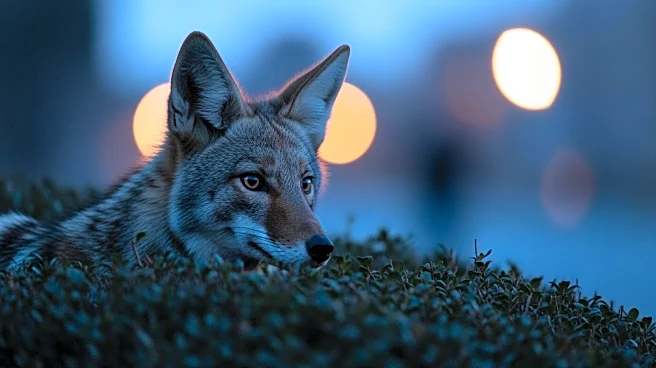
A recent study has found that urban coyotes display significantly higher levels of fear-related behaviors compared to their rural and peri-urban counterparts. The research observed coyote families in different environments, noting that urban coyotes spent
more time in vigilance behaviors such as high alertness and den-guarding. This heightened state of fear is attributed to the increased presence of humans and novel objects in urban areas, which may lead to more protective behaviors around pups. The study suggests that urban coyotes may be redirecting time from essential activities like hunting to pup supervision, potentially impacting their overall survival and behavior.
Why It's Important?
The findings of this study have important implications for urban wildlife management and coexistence strategies. Understanding the heightened fear responses of urban coyotes can inform non-lethal management practices that aim to reduce human-coyote conflicts. The study highlights the need for coexistence programs to consider the baseline levels of fear in urban coyotes and the potential negative impacts of fear-based management techniques. By addressing these factors, urban areas can better manage coyote populations and reduce the risk of conflicts, ultimately promoting a more harmonious coexistence between humans and wildlife.
Beyond the Headlines
The study's insights into coyote behavior also raise questions about the broader ecological impacts of urbanization on wildlife. As urban areas continue to expand, the pressure on wildlife to adapt to human presence increases, potentially leading to changes in behavior and ecology. The research underscores the importance of understanding these dynamics to develop effective conservation strategies that support biodiversity in urban environments. Additionally, the study's findings may have implications for other urban wildlife species, suggesting a need for further research into how urbanization affects animal behavior and ecosystem health.