


What's Happening?
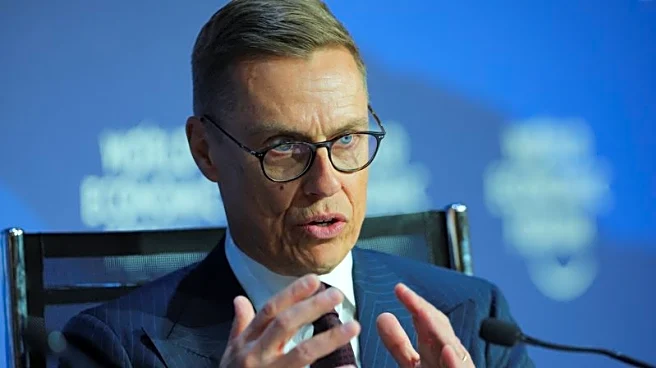
At the World Economic Forum in Davos, discussions were dominated by two contrasting themes: the rapid advancement of artificial intelligence and geopolitical tensions, particularly concerning Greenland. President Trump's remarks about acquiring Greenland shifted
focus from AI to geopolitical issues, creating a dual narrative at the forum. Meanwhile, Elon Musk's presentation on AI and robotics refocused attention on technological advancements. The forum highlighted a divide between the optimism surrounding AI's potential and the uncertainties posed by geopolitical shifts, reflecting a broader tension between innovation and political stability.
Why It's Important?
The discussions at Davos underscore the complex interplay between technological innovation and geopolitical dynamics. The focus on AI highlights its growing importance in shaping future industries and economies, while the geopolitical concerns, particularly regarding Greenland, reflect the uncertainties that can impact global markets and investments. This dual focus at Davos illustrates the challenges that businesses and policymakers face in balancing technological progress with geopolitical stability, which is crucial for strategic planning and investment decisions.
What's Next?
The outcomes of the Davos discussions suggest a need for clearer strategies to manage the intersection of technology and geopolitics. Businesses may need to adapt to a more fragmented global landscape, while policymakers might focus on creating frameworks that support innovation while addressing geopolitical risks. The ongoing dialogue between technology leaders and political figures will likely continue to shape the global economic and political environment, influencing future policies and investment strategies.