
What's Happening?
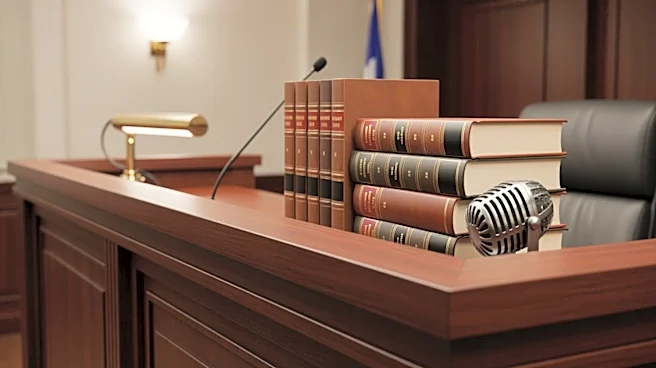
Maryland has recently enacted legislation that limits the use of rap lyrics as evidence in criminal cases. This move is part of a broader, five-year effort to curb a practice that critics argue infringes
on free speech and perpetuates racial bias. Historically, prosecutors have used hip-hop lyrics to secure convictions in over 800 cases across four decades, often targeting amateur artists but also affecting well-known figures like Boosie Badazz, Bobby Shmurda, and Young Thug. The practice has faced increasing opposition from artists, industry groups, and academics who argue that it unfairly treats rap as literal rather than artistic expression, thus denying it full First Amendment protections. Recent legal actions, including a Supreme Court brief by Travis Scott's attorneys, emphasize that engaging in rap should not equate to a 'death sentence.' Legislative efforts to restrict this practice have gained momentum, with significant support from high-profile artists and industry leaders.
Why It's Important?
The legislation in Maryland represents a significant step in addressing concerns about racial bias and free speech in the judicial system. By limiting the use of rap lyrics as evidence, the law aims to protect artists' creative expression and prevent the perpetuation of stereotypes against young Black men. This development could influence similar legislative efforts in other states and at the federal level, potentially reshaping how artistic works are treated in legal contexts. The involvement of prominent artists and industry figures underscores the cultural and social importance of this issue, highlighting the need for legal systems to adapt to contemporary forms of expression. The outcome of these efforts could have lasting implications for the music industry and the broader discourse on race and justice in America.
What's Next?
Following Maryland's legislative success, advocates are likely to push for similar laws in other states and at the federal level. The support from influential artists and industry leaders suggests that the movement to protect artistic expression in legal contexts will continue to gain traction. Future legislative efforts may focus on establishing clearer guidelines for when and how artistic works can be used in court, potentially leading to broader reforms in the judicial system. As the conversation around this issue evolves, it will be important to monitor how these changes impact both the legal landscape and the music industry.