






What's Happening?
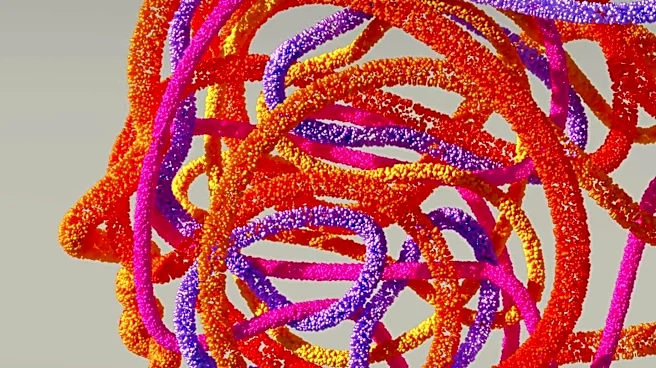
Researchers at Washington University School of Medicine and Syracuse University have developed a computational framework for designing intrinsically disordered proteins (IDRs). These proteins, which lack a stable 3D structure, play crucial roles in various
cellular processes and diseases. The new tool, named GOOSE, allows scientists to design synthetic IDRs, facilitating the exploration of their functions. This advancement could accelerate research in understanding protein behavior and developing treatments for diseases like cancer and neurodegeneration. The framework enables the creation of custom-built disordered proteins, potentially leading to breakthroughs in medical and biological research.
Why It's Important?
The ability to design disordered proteins at scale opens new avenues for scientific exploration and medical advancements. IDRs are involved in critical cellular functions and are linked to various diseases, yet their study has been limited by the complexity of their behavior. This framework provides researchers with a powerful tool to investigate the sequence-function relationships of IDRs, potentially leading to the development of new therapeutic strategies. By enabling the design of proteins that can respond to environmental changes, this technology could also contribute to advancements in fields like synthetic biology and bioengineering.