








What's Happening?
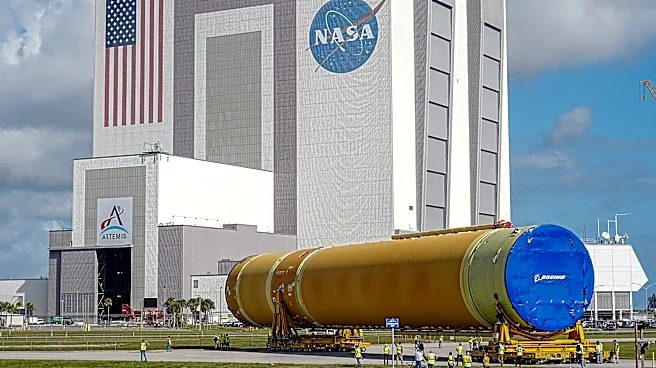
NASA's Artemis II mission marked a significant milestone in space exploration as the first crewed mission in the Artemis program and the first time astronauts traveled beyond low Earth orbit since the Apollo 17 mission in 1972. The four-person crew aboard
the Orion spacecraft, launched by NASA's Space Launch System (SLS) rocket, embarked on a deep-space test flight. This mission was designed to evaluate navigation systems, communication, life-support technology, and the spacecraft's performance with humans onboard. During their journey, the crew traveled thousands of miles beyond the far side of the Moon before returning to Earth. Throughout the mission, the astronauts captured over 12,000 photographs, documenting their experiences and the breathtaking views of Earth and the Moon from space.
Why It's Important?
The Artemis II mission is a crucial step in NASA's long-term plan to establish a sustainable human presence on and around the Moon. This mission not only tested critical technologies and systems needed for future lunar landings but also set the stage for Artemis III, which aims to return astronauts to the lunar surface, including the first woman and first person of color to walk on the Moon. The success of Artemis II demonstrates the feasibility of deep-space exploration and paves the way for future missions that could eventually lead to human exploration of Mars. The photographs taken during the mission provide a unique perspective on space exploration, inspiring a new generation and rekindling interest in human spaceflight.
What's Next?
Following the success of Artemis II, NASA is preparing for Artemis III, which is expected to land astronauts on the lunar surface. This mission will focus on establishing infrastructure such as the Lunar Gateway space station and long-duration lunar habitats, supporting extended exploration missions. The Artemis program aims to use the Moon as a scientific destination and a preparation ground for future missions to Mars. As NASA continues to develop and test new technologies, the Artemis missions will play a pivotal role in advancing human space exploration and expanding our understanding of the solar system.
Beyond the Headlines
The Artemis missions symbolize a new era of space exploration, moving beyond the historical achievements of the Apollo program. They represent a shift towards sustainable exploration, with the potential to transform our approach to space travel. The mission's success also highlights international collaboration, as the Artemis program involves partnerships with space agencies from other countries. The photographs taken during Artemis II not only capture the technical achievements but also reflect the human curiosity and spirit of exploration that drive these missions. As humanity ventures further into space, the Artemis program serves as a reminder of our shared quest for knowledge and discovery.