



What's Happening?
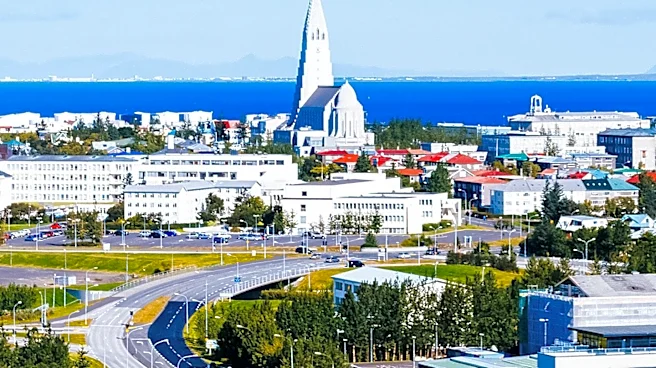
Reykjavík, the capital of Iceland, is highlighted as a city rich in history and natural attractions. Key landmarks include the Settlement Exhibition, Hallgrímskirkja, and the Harpa Concert Hall. Visitors to Reykjavík have opportunities to experience the northern
lights, particularly from locations such as Perlan and Grótta Lighthouse. The city also provides various cultural experiences and outdoor activities, including walking tours of Old Town Reykjavík and visits to the Blue Lagoon. The historical roots of Reykjavík trace back to the 9th century, when Ingólfur Arnarson established the first farm, which subsequently evolved into Iceland's cultural and governmental center. The city serves as a gateway to exploring Iceland's diverse landscapes, from volcanic formations to geothermal spas.
Why It's Important?
The prominence of Reykjavík as a tourist destination underscores the growing interest in unique travel experiences that combine cultural immersion with natural exploration. For the U.S. tourism industry, this trend signifies a shift in traveler preferences towards destinations offering distinct geological features and historical depth, potentially influencing travel package development and marketing strategies. The emphasis on natural wonders like the northern lights and the Blue Lagoon highlights the economic value of ecotourism and sustainable travel practices. This can lead to increased demand for specialized travel services and eco-friendly accommodations, impacting U.S. travel agencies and airlines that cater to international leisure travel. Furthermore, the historical narrative of Reykjavík, dating back to the 9th century, appeals to those seeking educational and enriching travel, contributing to a broader appreciation for global history and culture among U.S. citizens.
What's Next?
As Reykjavík continues to attract international visitors, including those from the U.S., there may be further development in its tourism infrastructure to accommodate increasing demand. This could involve the expansion of hotel capacities, enhancement of guided tour services, and improved transportation links to key attractions. The focus on natural phenomena like the northern lights suggests a continued emphasis on seasonal tourism, potentially leading to specialized travel packages during peak viewing times. Additionally, the city's commitment to preserving its historical sites and natural environment will likely drive initiatives for sustainable tourism, which could influence how U.S. tour operators structure their offerings to align with eco-conscious travel trends. Future developments might also include more cultural exchange programs and events designed to showcase Iceland's unique heritage to a global audience.
Beyond the Headlines
The appeal of Reykjavík extends beyond its immediate attractions, touching upon broader themes of environmental stewardship and cultural preservation. The city's ability to integrate its rich history with its stunning natural environment offers a model for other destinations seeking to balance tourism growth with ecological responsibility. The emphasis on experiences like the Blue Lagoon, a geothermal spa formed by volcanic lava, highlights the intrinsic connection between the land and the local culture, fostering a deeper understanding of geological processes and their impact on human life. This also brings to light the ethical considerations of managing natural resources in the face of increasing tourism, prompting discussions on sustainable practices and responsible travel. For U.S. travelers, visiting Reykjavík can offer a profound appreciation for the planet's natural beauty and the importance of preserving such unique environments for future generations.