


What's Happening?
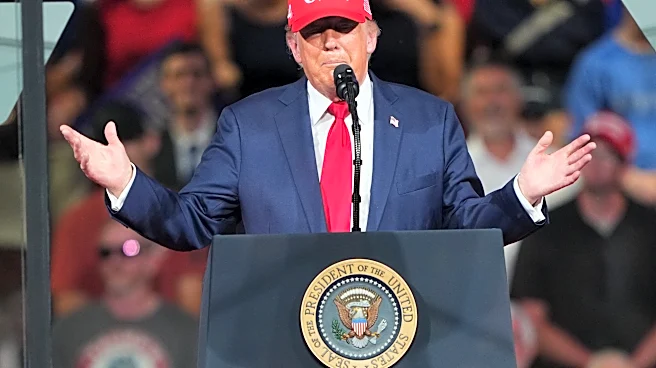
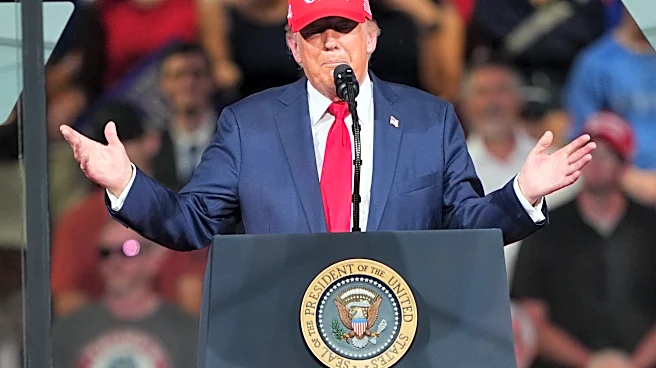
As Russia prepares for parliamentary elections, the political landscape is significantly influenced by President Trump's actions, particularly regarding military aid to Ukraine and sanctions against Russia. According to the source, President Trump has
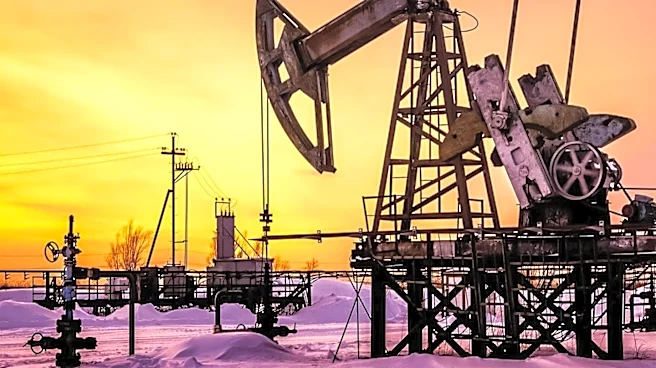
'hamstrung Ukraine by cutting military aid' and has 'taken Russia's side in all negotiations for peace.' Furthermore, he is reportedly 'sitting on legislation that would cut back on Putin's profits from oil price spikes that Trump caused.' This context is set against a backdrop of internal Russian challenges, including a fuel crisis, a rising number of war casualties, and a shrinking civilian economy. Despite these issues, the ruling United Russia Party is expected to secure a victory, with independent candidates being systematically excluded from the electoral process. The National Wealth Fund, Russia's sovereign reserve, has seen its liquid assets decrease from $113.5 billion before the 2022 invasion to less than $50 billion, indicating financial strain. However, oil price spikes, attributed to the Israeli-U.S. war against Iran, have provided Russia with a daily bonus of up to $150 million, according to Chatham House.
Why It's Important?
President Trump's approach to the Russia-Ukraine conflict and his stance on related legislation have significant implications for both U.S. foreign policy and the internal dynamics of Russia. By allegedly reducing military aid to Ukraine and not acting on legislation that could curb Russia's oil profits, President Trump's actions are perceived to inadvertently benefit the current Russian leadership, potentially solidifying their position ahead of parliamentary elections. This situation highlights the complex interplay between international relations and domestic politics, where external pressures and internal economic conditions can influence electoral outcomes. The economic challenges within Russia, such as the thinning National Wealth Fund and the split economy (with a growing military-industrial sector and a stagnating civilian one), suggest that while the regime maintains control, there are underlying vulnerabilities. The reported dip in President Putin's approval rating, though not a collapse, indicates a degree of public discontent, particularly among poorer and younger Russians affected by petrol shortages. The U.S. role in this context is crucial, as its policy decisions can either exacerbate or alleviate Russia's economic pressures and, by extension, influence its political stability.
What's Next?
The immediate future will likely see the Russian parliamentary elections proceed as anticipated, with the ruling United Russia Party securing a dominant position, enabling them to potentially rewrite the constitution. The impact of President Trump's continued inaction on the bill designed to curb Russia's oil profits will be a key factor in Russia's economic resilience. If the bill remains unsigned, Russia could continue to benefit from elevated oil prices, providing a financial cushion for its military operations and domestic programs. Conversely, if the legislation were to be enacted, it could significantly increase economic pressure on Moscow, potentially affecting its ability to fund the war and manage internal dissent. The ongoing war in Ukraine, coupled with Kyiv's effective long-range missile attacks on Russian oil facilities, will continue to strain Russia's economy and fuel supply. The White House's future decisions regarding this legislation and its broader stance on supporting European allies against Russian aggression will be critical in shaping the geopolitical landscape and the trajectory of the conflict.
Beyond the Headlines
The situation in Russia, influenced by U.S. policy, reveals deeper implications regarding the nature of authoritarian governance and the role of external actors in shaping internal political outcomes. The systematic suppression of independent candidates and the labeling of opposition figures as 'foreign agents' highlight the challenges to democratic processes in Russia. The reported skewing of polling data due to fear of reprisal underscores the difficulty in accurately gauging public sentiment in such environments. Furthermore, the economic bifurcation within Russia, with a thriving military-industrial complex alongside a struggling civilian economy, points to a strategic prioritization of military strength over broader societal well-being. This dynamic could lead to long-term social and economic disparities, potentially fostering deeper resentment. The U.S.'s perceived role in either enabling or constraining Russia's economic and political maneuvers raises ethical questions about the responsibility of global powers in influencing the internal affairs of other nations, particularly in times of conflict.