





What's Happening?
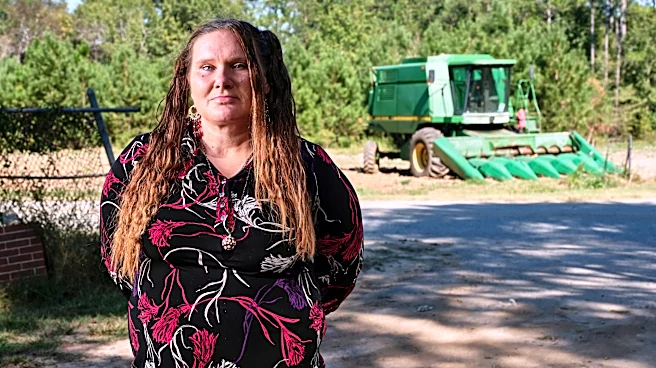
U.S. Representative Andy Barr (R-Ky.) has sponsored the Lawful Hemp Protection Act, a bill aimed at safeguarding the U.S. hemp industry. This legislative effort comes as Kentucky hemp farmers, like Jay Grundy of Cornbread Hemp in Marion County, are harvesting
their crops under significant uncertainty. A December deadline looms for Congress to address the legality of hemp-derived THC products, which could determine the future of the industry. Last year, U.S. Senator Mitch McConnell (R-Ky.) introduced language in a spending bill that closed a loophole related to these products. Currently, there are no federal regulations distinguishing between U.S.-grown hemp products and those imported from overseas. Farmers are expressing anxiety over their investments and the potential shutdown of their businesses if Congress fails to act, with Grundy stating that without congressional intervention, the industry would be 'essentially shutdown.'
Why It's Important?
The potential shutdown of the U.S. hemp industry would have significant economic repercussions, particularly for states like Kentucky, which has a substantial agricultural sector invested in hemp cultivation. Farmers have made considerable investments in equipment and land, and a lack of clear federal regulation or a ban on hemp-derived THC products could lead to widespread financial losses and job displacement. The Lawful Hemp Protection Act, sponsored by Representative Barr, seeks to provide the necessary legal framework to stabilize the industry, protect farmers' livelihoods, and ensure the continued production of organic, traceable hemp products. The current regulatory ambiguity also creates an uneven playing field, as imported products may not adhere to the same standards as domestically grown hemp. This situation highlights the broader challenge of balancing agricultural innovation with evolving federal drug policies and the need for clear, consistent regulations to support emerging industries.
What's Next?
The immediate future of the U.S. hemp industry hinges on congressional action before the December deadline. Lawmakers will need to consider the Lawful Hemp Protection Act and other proposed bills to establish clear federal regulations for hemp and hemp-derived THC products. The outcome will determine whether the industry can continue to operate and grow or if it faces a significant contraction. Stakeholders, including farmers, processors, and consumers, will be closely watching legislative developments. If Congress fails to pass protective legislation, many hemp farms could be forced to cease operations, leading to economic hardship for those involved. Conversely, successful legislation could provide stability, encourage further investment, and allow the industry to thrive under a regulated framework, potentially leading to new market opportunities and product development.
Beyond the Headlines
The debate surrounding the hemp industry touches upon several deeper implications, including the evolving societal perception of cannabis-related products and the challenges of regulating a rapidly growing agricultural sector. The distinction between 'gas-station weed' and traceable, organic hemp products, as highlighted by farmer Jay Grundy, underscores the need for consumer education and robust quality control. The situation also reflects the broader tension between federal and state laws regarding cannabis, even for non-psychoactive or low-THC varieties. The economic vulnerability of farmers who have invested in a nascent industry due to regulatory uncertainty raises questions about government support for agricultural diversification and the need for proactive policy-making. Furthermore, the push for federal regulation could set precedents for how other emerging agricultural or bio-industrial sectors are managed, balancing economic opportunity with public health and safety concerns.