






What's Happening?
An international team of scientists has discovered that agricultural practices in the U.S. Corn Belt significantly contribute to the formation of large thunderstorm complexes. The study, led by researchers at the U.S. National Science Foundation National Center
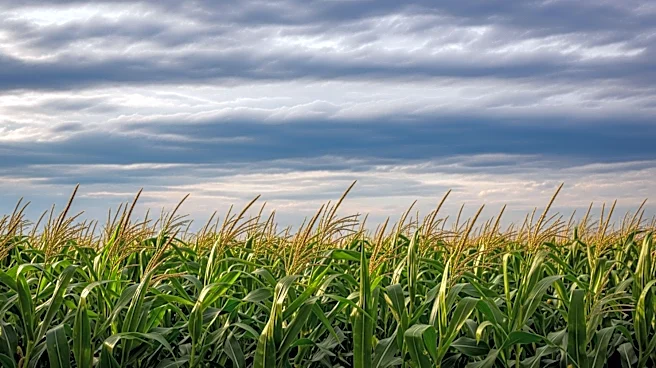
for Atmospheric Research, focused on mesoscale convective systems (MCSs), which are clusters of thunderstorms that span at least 60 miles and last for extended periods. The research found that moisture from crops, irrigation systems, and shallow groundwater increases the frequency and duration of these storm systems. The study utilized advanced computer simulations to analyze the interaction between agricultural practices and atmospheric conditions, revealing that these factors increase storm frequency by 24% to 35% and extend their duration by about 10%. The findings were published in 'Nature Communications Earth & Environment' and involved collaboration with institutions from Switzerland, Spain, and Hong Kong.
Why It's Important?
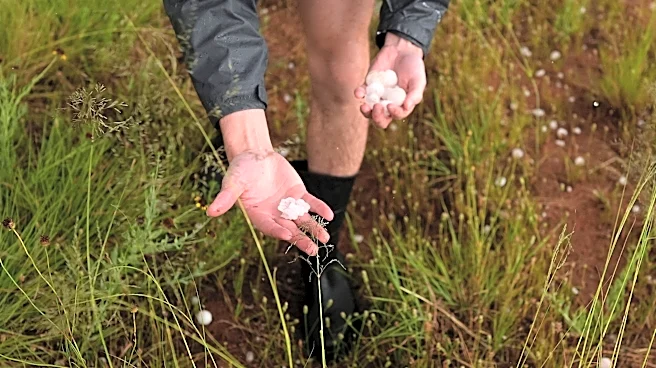
The study's findings have significant implications for weather forecasting and agricultural planning in the Midwest and Great Plains. MCSs account for a substantial portion of growing-season precipitation in the Corn Belt, which is crucial for maintaining its status as a leading corn-producing region. However, these storms can also lead to severe weather events such as flooding, hail, and tornadoes, posing risks to communities and infrastructure. Understanding the link between agricultural practices and storm formation can improve short-term severe weather forecasts and long-term climate models, aiding in better preparation and response strategies. Additionally, the research highlights the need for sustainable land use and water management practices to mitigate adverse weather impacts.
What's Next?
The study suggests that future research should focus on refining atmospheric models to incorporate the effects of land use changes on weather patterns. This could lead to improved predictions and strategies for managing agricultural practices and water resources in the Corn Belt. Policymakers and farmers may need to consider these findings when planning crop rotations and irrigation systems to balance agricultural productivity with environmental sustainability. Further studies could also explore the broader implications of these findings on climate change and regional weather patterns.
Beyond the Headlines
The research underscores the complex relationship between human activities and natural systems, highlighting the unintended consequences of agricultural expansion. As the demand for food production grows, understanding how these practices affect weather patterns becomes increasingly important. The study also raises ethical considerations regarding the balance between agricultural development and environmental stewardship, prompting discussions on sustainable farming practices that minimize ecological disruption.