






What's Happening?
Crude oil exports from the Persian Gulf, excluding Iran, reached at least 16.5 million barrels per day from September 1 to 28, according to analytics company Kpler, as reported by OilPrice. This volume matches pre-war averages. However, the structure
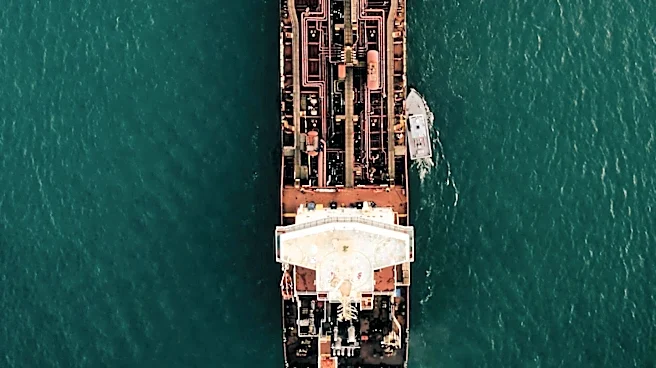
of transportation has significantly changed. While 83% of the region's oil exports previously transited through the Strait of Hormuz, only approximately 60% (9.9 million barrels per day) did so in September. The remaining oil bypassed the strait via pipelines and other routes in Saudi Arabia and the United Arab Emirates. A notable development is that over 70% of the oil passing through the Strait of Hormuz in August was transferred from one tanker to another at sea in the Gulf of Oman, forming a new export system where vessels deliver oil to larger tankers outside the Persian Gulf.
Why It's Important?
The shift in oil transportation methods from the Persian Gulf has significant implications for global energy markets and U.S. interests. The reliance on new routes, pipelines, and offshore transfers reduces Iran's traditional leverage over the Strait of Hormuz, a critical chokepoint for global oil supplies. While this could potentially stabilize supply routes by diversifying them, it also introduces new complexities and costs. Energy market analyst Ellen R. Wald notes that despite a perceived decline in Iran's willingness to attack vessels, higher insurance costs, ongoing threats to shipping, and the continued need for U.S. military escort maintain a 'war premium' in oil prices. This premium contributes to elevated retail diesel fuel prices in both Europe and the United States, impacting consumers and businesses through increased transportation and operational costs. The U.S. Navy's support for vessels in the Strait of Hormuz underscores the ongoing security concerns and the strategic importance of maintaining open and secure maritime trade routes.
What's Next?
The evolving dynamics in Persian Gulf oil exports suggest a continued adaptation of shipping strategies to mitigate geopolitical risks. The increased use of offshore transfers and alternative pipeline routes is likely to persist as a means to circumvent potential disruptions in the Strait of Hormuz. This could lead to further investments in infrastructure that bypass the strait, potentially altering long-term shipping patterns and reducing the strategic importance of the waterway. However, the sustained presence of the U.S. Navy and the ongoing 'war premium' in oil prices indicate that security concerns in the region will remain a significant factor. Stakeholders, including oil companies, shipping insurers, and governments, will continue to monitor the situation closely, adapting their operations and policies to manage the associated risks and costs. The impact on retail fuel prices in the U.S. will depend on the stability of these new export systems and the broader geopolitical landscape.
Beyond the Headlines
The transformation of oil export routes from the Persian Gulf highlights a deeper geopolitical shift, where traditional chokepoints are being circumvented through technological and logistical innovation. This development diminishes the historical leverage of nations like Iran, which have historically used their geographical position to influence global energy flows. However, it also raises questions about the environmental impact of increased offshore transfers and the potential for new vulnerabilities in these diversified routes. The reliance on U.S. military escort, even with new routes, underscores the enduring role of global powers in ensuring the security of international trade. This situation reflects a broader trend in global commerce where supply chain resilience is prioritized, often at increased cost, to mitigate geopolitical and security risks. The long-term implications could include a re-evaluation of naval presence in key maritime regions and a sustained focus on energy security through diversified supply chains.