




What's Happening?
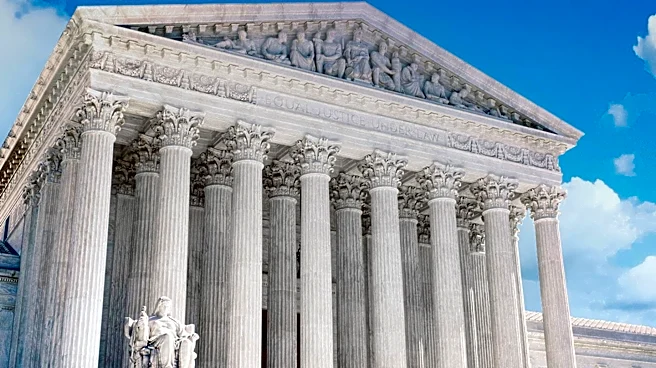
The Supreme Court's GOP-appointed majority has granted an emergency request from the Trump administration to utilize a modified citizenship database, overriding objections from the Court's Democratic appointees. This decision allows the administration to proceed
with its updated 'SAVE' (Systematic Alien Verification for Entitlements) program, which now includes records of natural-born citizens, accesses social security records, and permits bulk searches by users. The administration sought this urgent relief after U.S. District Judge Sparkle Sooknanan issued an order on June 22, blocking the use of the modified database. Judge Sooknanan found that the government had "knowingly trampled on the privacy rights of American citizens" and threatened voting rights. The Supreme Court majority stated that the district court's order "inhibits the Federal Government’s efforts to assist state and local agencies in the proper administration of the midterm elections," arguing that the government would suffer irreparable harm without the relief. Justice Ketanji Brown Jackson, writing for the dissenting Democratic appointees, criticized the majority for prioritizing perceived harms to the government over documented harms to lawful voters.
Why It's Important?
This Supreme Court decision has significant implications for privacy rights and voting integrity in the U.S. The expansion of the SAVE database to include natural-born citizens and social security records, coupled with bulk search capabilities, raises substantial concerns about the potential for misuse of personal data and the disenfranchisement of eligible voters. Critics, including the League of Women Voters and the Electronic Privacy Information Center, argue that the system is "error-laden" and endangers millions of Americans' privacy and voting rights. The Court's decision to grant emergency relief, despite lower court findings of unlawful activity and privacy violations, highlights a judicial willingness to prioritize administrative efficiency over individual protections. This could set a precedent for future government data collection and verification programs, potentially making it easier for administrations to implement systems that critics argue could suppress votes or infringe on civil liberties, particularly for marginalized communities.
What's Next?
The Trump administration will now be able to use the modified SAVE database to assist state and local election officials in verifying voter citizenship. This could lead to increased scrutiny of voter rolls and potential challenges to voter eligibility, particularly in the lead-up to midterm elections. Civil rights organizations and privacy advocates are likely to continue their legal challenges against the database, seeking to demonstrate the real-world harms to voters and privacy. The dissenting justices' strong language suggests ongoing internal debate within the Supreme Court regarding the balance between government interests and individual rights. Future legal battles may focus on the implementation of the database, the accuracy of its records, and its impact on voter participation, potentially leading to further litigation and appeals as the system is put into practice.
Beyond the Headlines
The Supreme Court's decision on the citizenship database touches upon fundamental questions about the role of government in verifying citizenship for voting and the extent of its power to collect and utilize personal data. This case reflects a broader ideological divide within the judiciary regarding the interpretation of privacy rights versus governmental authority, especially in the context of national security and election integrity. The use of an "error-laden" system, as described by critics, could disproportionately affect minority groups and naturalized citizens, who may face greater hurdles in proving their eligibility. This could lead to a chilling effect on voter registration and participation, undermining democratic processes. The long-term implications include a potential shift in the legal landscape surrounding data privacy and voting rights, with a greater emphasis on government verification at the expense of individual autonomy and protection against surveillance.