







What's Happening?
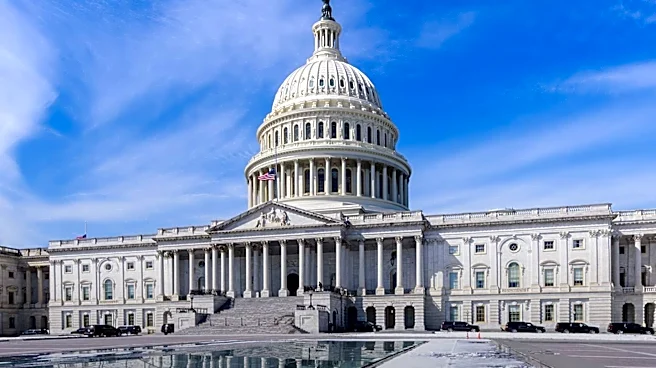
U.S. Representative Brian Mast, who chairs the House Foreign Affairs Committee, has advocated for considering sanctions against key Cambodian political figures. This call stems from their alleged involvement in and links to scam center operations that
have proliferated, particularly since the COVID-19 pandemic. One of the individuals specifically mentioned is Neth Savoeun, a deputy prime minister of Cambodia. These cyberscam operations have resulted in significant financial losses for victims, estimated by the U.N. Office on Drugs and Crime to range from $88.3 billion to $114.1 billion in 2025. Hundreds of thousands of individuals are reportedly forced to perpetuate these schemes. While Cambodia's Prime Minister Hun Manet claims the country has dismantled large-scale scam compounds, experts and other governments argue that insufficient action has been taken to dismantle the underlying criminal organizations and prosecute those who profited from these enterprises.
Why It's Important?
The push for sanctions by a U.S. congressional leader highlights a growing international concern over transnational cybercrime and human trafficking, which often underpins these scam operations. The alleged involvement of high-ranking Cambodian officials underscores challenges in combating corruption and enforcing rule of law in regions where such activities thrive. For the U.S., addressing these issues is crucial for protecting its citizens from financial fraud and upholding international norms against organized crime. Sanctions could serve as a powerful diplomatic tool to pressure foreign governments into taking more decisive action against criminal networks, potentially impacting bilateral relations and aid. The economic scale of these scams, with billions of dollars in losses, also poses a global financial threat, affecting individuals and potentially destabilizing economies.
What's Next?
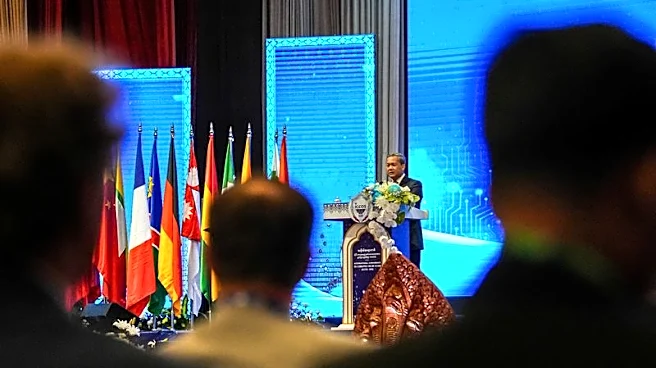
The call for considering sanctions suggests that the U.S. Congress may explore legislative avenues to impose penalties on Cambodian officials if the situation does not improve. This could involve further investigations by U.S. agencies and diplomatic pressure on Cambodia to intensify its efforts against scam operations and prosecute those responsible. International bodies, such as the U.N. Office on Drugs and Crime and Interpol, which recently co-hosted a conference with Cambodia on tackling cyberscams, will likely continue to monitor the situation and provide recommendations. The effectiveness of Cambodia's stated dismantling of scam compounds will be scrutinized by international observers, and further actions from the U.S. and other nations will depend on tangible evidence of progress in dismantling criminal networks and holding perpetrators accountable.
Beyond the Headlines
Beyond the immediate financial and criminal implications, the issue of scam centers in Southeast Asia, and Cambodia specifically, touches upon deeper ethical and human rights concerns. Many individuals involved in perpetrating these scams are reportedly victims of human trafficking, forced into labor under coercive conditions. This adds a complex layer to the problem, as efforts to dismantle scam operations must also consider the safe repatriation and rehabilitation of these trafficked individuals. The alleged complicity of political figures raises questions about governance, corruption, and the challenges of promoting human rights and ethical business practices in developing nations. The long-term implications could include a re-evaluation of international aid and investment strategies in countries perceived as havens for such illicit activities, potentially leading to broader policy shifts aimed at strengthening governance and combating corruption globally.