








What's Happening?
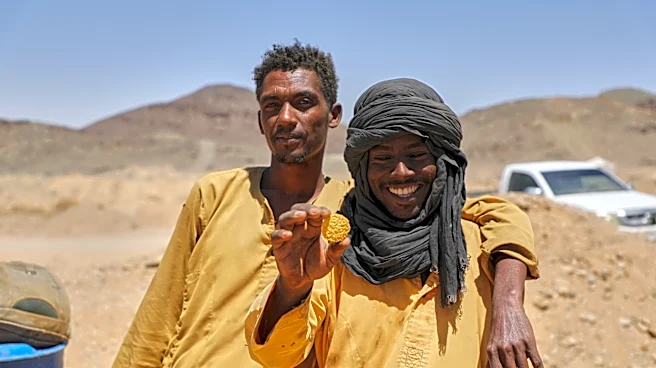
In Sudan, the gold mining industry continues to thrive despite the ongoing war and economic challenges. Unregulated miners in northern Sudan are risking their lives in small-scale private gold mines, which are part of a sector central to the country's
war economy. Following the secession of South Sudan in 2011, gold became a major source of revenue for Sudan, accounting for 70% of national revenues. The ongoing conflict between the military and the paramilitary Rapid Support Forces has led to large quantities of gold being smuggled out of the country to finance paramilitaries. The war has resulted in significant loss of life and created a humanitarian disaster, forcing many to turn to gold mining for survival.
Why It's Important?
The situation in Sudan highlights the complex interplay between natural resources and conflict. Gold mining has become a lifeline for many Sudanese, providing economic opportunities in a war-torn country. However, the lack of regulation and safety measures poses significant risks to miners and the environment. The smuggling of gold to finance paramilitary groups further exacerbates the conflict, undermining efforts for peace and stability. The international community's response to these challenges could influence future economic and political developments in Sudan.
What's Next?
Efforts to regulate the gold mining industry in Sudan have been hampered by political instability. A civilian transitional government attempted to implement regulations, but these efforts were disrupted by a military coup in 2021. As the conflict continues, the future of Sudan's gold mining industry remains uncertain. International pressure and support for peace initiatives could play a crucial role in stabilizing the region and ensuring that the country's natural resources benefit its people.