




What's Happening?
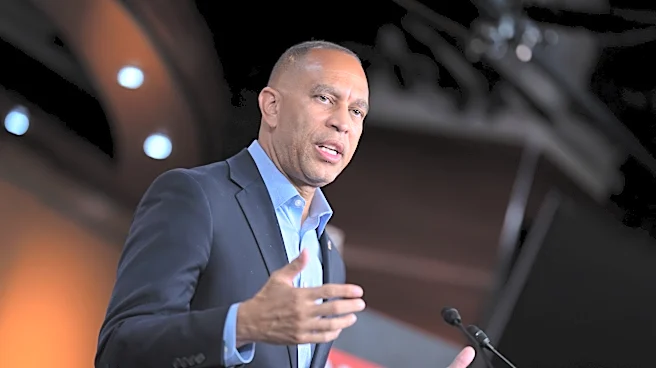
Wajahat Ali, a regular guest on MSNBC shows hosted by Mehdi Hasan and Joy Reid, is facing criticism after his podcast guest, Palestinian journalist Rula Jebreal, referred to House Minority Leader Hakeem Jeffries as a 'monkey' and an 'errand boy.' Ali reportedly
nodded along during the incident. Following the backlash, Ali and Jebreal appeared on Joy Reid's podcast for what critics termed 'rehabilitation.' Ali subsequently posted on X, describing himself as 'just a small-time podcast host who drives a minivan' and suggesting critics should focus on figures like Laura Loomer and John Fetterman instead. This defense has been met with further criticism, with many accusing Ali of playing the victim and engaging in 'whataboutism' to deflect from the original incident.
Why It's Important?
This incident is important as it highlights ongoing issues of racial insensitivity and accountability within media discourse in the U.S. The use of a racial slur against a prominent Black political figure like Hakeem Jeffries, regardless of the speaker's intent, is a serious matter that can perpetuate harmful stereotypes and undermine efforts towards racial equality. Wajahat Ali's response, attempting to downplay his influence and deflect criticism, raises questions about personal responsibility for content produced on one's platform. For U.S. audiences, it underscores the need for media personalities to be vigilant against hate speech and to address it promptly and unequivocally. The 'rehabilitation' tour also brings into focus the dynamics of media support networks and how public figures manage controversies.
What's Next?
The controversy is likely to continue to generate discussion on social media and in media criticism circles. Wajahat Ali may face continued pressure to issue a more direct apology or to clarify his stance on the use of racial slurs. MSNBC and other platforms that host Ali may also face scrutiny regarding their association with him, potentially leading to internal discussions about guest selection and content standards. This incident could also prompt broader conversations about the responsibility of podcast hosts to moderate their guests' language and the effectiveness of 'whataboutism' as a defense strategy in public controversies. The political implications could also extend to how such incidents are perceived by different political factions, potentially exacerbating existing divisions.
Beyond the Headlines
This event delves into deeper implications regarding the performative aspects of public apologies and accountability in the digital age. Ali's attempt to minimize his role by portraying himself as a 'small-time podcaster' highlights a common tactic used by public figures to deflect serious criticism, raising questions about the sincerity of such defenses. The immediate 'rehabilitation' on another prominent podcast suggests a network of support that can sometimes shield individuals from full accountability, creating an echo chamber where critical self-reflection might be sidestepped. Furthermore, the incident underscores the persistent challenge of combating racism and racial slurs, even within progressive media circles, and the difficulty of holding individuals accountable when they attempt to shift blame or play the victim. It also reflects the broader cultural struggle to define acceptable discourse and enforce consequences for harmful speech.