
What's Happening?
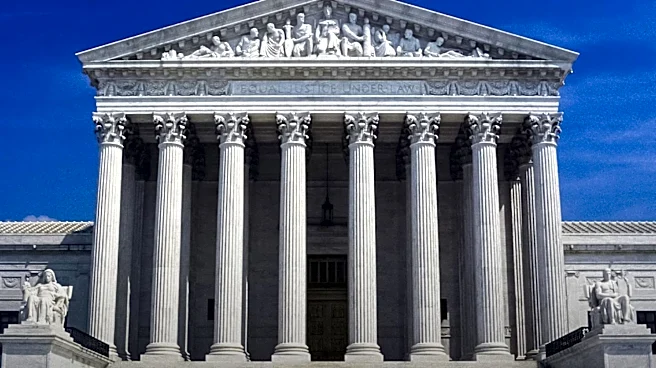
U.S. Supreme Court Justice Sonia Sotomayor noted in her dissent regarding the 2025 decision in *Mahmoud v. Taylor* that the ruling could lead to schools removing books from their shelves to avoid religious objections. This concern is highlighted in the context
of a Mombian database, which has reached over 2,100 entries of LGBTQ-inclusive books for children. The database creator points out that many of these books are already effectively banned in some states' schools and public libraries due to sweeping censorship laws. The article also mentions that increasing evidence suggests censorship is reducing the number of LGBTQ-inclusive books publishers are willing to consider, impacting the entire publishing and library ecosystem. While the number of LGBTQ-inclusive books published this year is less than in previous years, it remains significantly higher than before 2017.
Why It's Important?
Justice Sotomayor's dissent underscores a critical concern regarding the potential for the Supreme Court's decisions to inadvertently fuel book banning in schools and public libraries across the U.S. This development has significant implications for intellectual freedom, educational curricula, and the representation of diverse communities in literature. The removal of LGBTQ-inclusive books, driven by religious objections or broader censorship laws, can limit students' exposure to different perspectives and identities, potentially hindering their understanding of a diverse society. For the publishing industry, this trend creates a chilling effect, as publishers may become more hesitant to invest in and produce books that could face challenges, thereby narrowing the range of available literature. This situation impacts not only LGBTQ youth who seek to see themselves reflected in stories but also all students who benefit from a rich and varied literary landscape. The ongoing debate over book content in schools reflects a broader cultural and political struggle over values and education in the United States.
What's Next?
The concerns raised by Justice Sotomayor's dissent suggest that the issue of book banning in schools and libraries will likely continue to be a contentious area in U.S. public discourse. Schools and library systems may face increased pressure to review and potentially remove books, particularly those with LGBTQ-inclusive themes, to avoid legal challenges or community backlash. Advocacy groups for intellectual freedom and LGBTQ rights are expected to continue their efforts to combat censorship and promote diverse literature. Conversely, groups advocating for parental rights and religious freedom may intensify their campaigns for greater control over school curricula and library collections. The publishing industry will likely monitor these trends closely, potentially adjusting their acquisition and publication strategies in response to the evolving legal and social landscape. This ongoing tension could lead to further legal battles, policy changes at state and local levels, and continued public debate over the role of schools and libraries in shaping young minds.
Beyond the Headlines
The implications of Justice Sotomayor's dissent extend beyond the immediate issue of book banning, touching upon fundamental questions of democratic values, pluralism, and the role of education in a diverse society. The removal of books, particularly those representing marginalized communities, can be seen as an attempt to erase certain identities and narratives from public consciousness, potentially fostering an environment of exclusion and misunderstanding. This trend challenges the principle of intellectual freedom, which is vital for critical thinking and an informed citizenry. Furthermore, the influence of religious objections on public education policy raises questions about the separation of church and state and the extent to which private beliefs should dictate public resources. The long-term consequences could include a less inclusive educational system, a stifled literary landscape, and a society less equipped to navigate complex social issues. This situation highlights the ongoing struggle to balance individual freedoms, community values, and the constitutional principles that underpin American democracy.