
What's Happening?
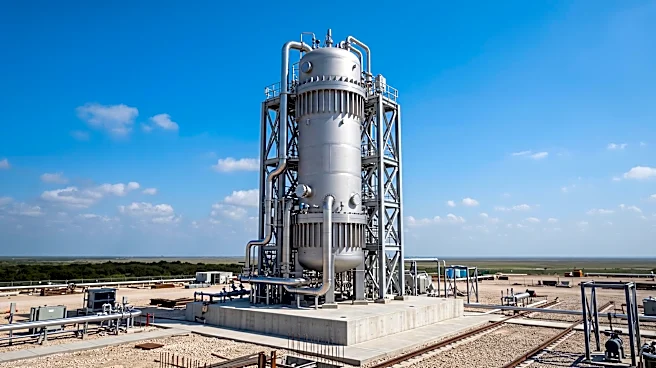
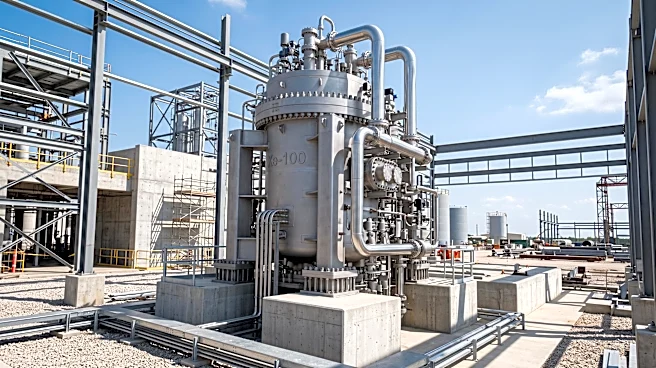
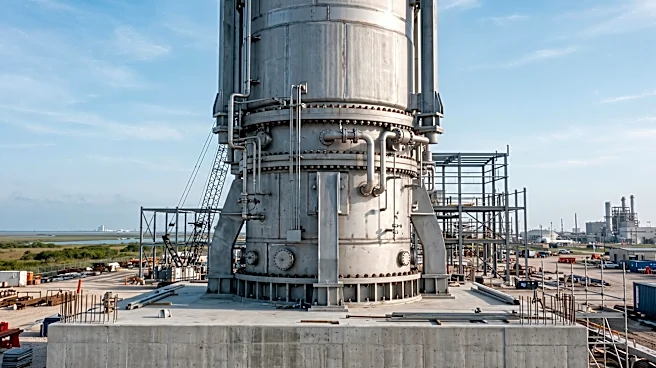
The Nuclear Regulatory Commission (NRC) has granted a construction permit to X-energy for its four small modular reactor (SMR) project in Texas. This marks the first time in over 50 years that a high-temperature
gas-cooled reactor has received such a permit, and it is the third advanced reactor permit issued by the NRC this year. The project, planned for Seadrift, Texas, will power Dow’s UCC Seadrift Operation manufacturing facility, which currently relies on natural gas. X-energy aims to have the first of its Xe-100 SMR reactors online by the early 2030s. The construction permit application, filed by Dow’s subsidiary Long Mott Energy in March 2025, received a streamlined licensing review. However, Edwin Lyman, Director of Nuclear Power Safety at the Union of Concerned Scientists, has criticized the decision as a 'reckless approval,' citing concerns about the reactor design's lack of a physical containment structure and unproven safety functions.
Why It's Important?
This NRC decision is significant for the future of nuclear power in the United States, particularly for advanced reactor technologies. It signals a potential acceleration in the deployment of SMRs, which are seen by some as a crucial component for decarbonizing industrial processes and providing reliable baseload power. The streamlined licensing process highlights a push by Congress and the NRC to facilitate new nuclear construction. However, the safety concerns raised by Edwin Lyman underscore a critical debate within the nuclear industry and regulatory bodies. The absence of a physical containment structure in X-energy's design, and the reliance on unproven safety functions, could set a precedent that critics argue might compromise public health and safety. This tension between rapid deployment and rigorous safety standards will likely shape public perception and future regulatory approaches to advanced nuclear technologies.
What's Next?
Following the issuance of the construction permit, X-energy and Dow are set to advance the project. Dow is expected to make a preliminary investment decision next year, with nuclear construction commencing only after a final investment decision is made. The project is also receiving support from the Department of Energy’s Advanced Reactor Demonstration Program, indicating continued governmental backing for advanced nuclear initiatives. However, the concerns raised by the Union of Concerned Scientists suggest that the project may face ongoing scrutiny regarding its safety protocols and design. The NRC's stance that the permit does not constitute final approval of the containment-free design implies that further safety evaluations will be critical. The outcome of this project could influence future regulatory frameworks for SMRs and the broader adoption of advanced nuclear technologies across the U.S. industrial sector.
Beyond the Headlines
The approval of X-energy's SMR project without a traditional physical containment structure raises profound questions about the evolution of nuclear safety philosophy. Historically, containment buildings have been a cornerstone of nuclear reactor safety, designed to prevent the release of radioactive materials in the event of an accident. The shift towards designs that rely on inherent safety features and advanced fuels, like TRISO fuel, without physical containment, represents a significant departure. This development could lead to a re-evaluation of international nuclear safety standards and regulatory practices. The ethical implications of prioritizing expedited deployment over established safety measures, as argued by critics, will likely fuel public and expert debate. Furthermore, the project's integration into an industrial facility like Dow's UCC Seadrift Operation could pave the way for broader industrial applications of nuclear power, potentially transforming energy supply chains and industrial emissions profiles in the long term.