







What's Happening?
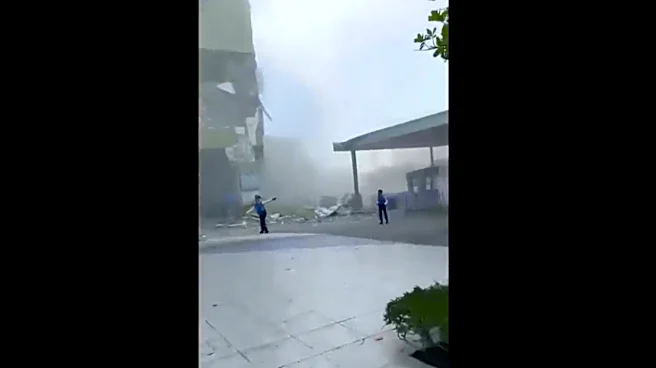
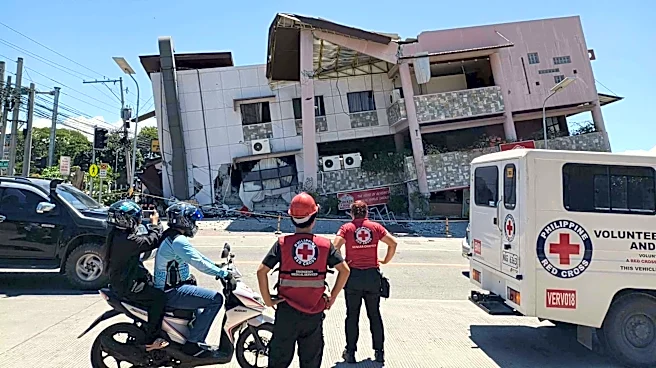
A magnitude 7.8 earthquake struck the southern Philippines on June 8, 2026, resulting in at least 32 fatalities and over 200 injuries. The quake, which hit offshore near Mindanao, caused significant structural damage in General Santos and surrounding
areas. It also triggered a tsunami, with waves reaching up to 3 feet in height along the coastlines of the Philippines, Indonesia, and as far as Japan. The earthquake led to the collapse of several buildings, including a mosque, and caused a landslide in Sarangani province, which resulted in additional casualties. The United States, along with France and New Zealand, has offered support to the Philippines in response to the disaster.
Why It's Important?
The earthquake highlights the vulnerability of the Philippines to natural disasters, given its location on the Pacific 'Ring of Fire.' The event underscores the need for robust disaster preparedness and response strategies in the region. The impact on infrastructure, including the temporary closure of General Santos' international airport and the cancellation of flights, demonstrates the potential for significant economic disruption. The international response, including offers of aid from the U.S. and other countries, reflects the global community's role in disaster relief and the importance of international cooperation in addressing such crises.
What's Next?
As the immediate threat of a tsunami has passed, focus will shift to recovery and rebuilding efforts. Authorities will need to assess the full extent of the damage and prioritize the restoration of essential services and infrastructure. The Philippine government, led by President Ferdinand Marcos Jr., has already mobilized disaster-response agencies to assist affected areas. Continued international support may be crucial in the coming weeks as the country works to recover from the disaster. Additionally, there may be increased emphasis on improving building codes and disaster preparedness to mitigate future risks.
Beyond the Headlines
The earthquake may prompt a reevaluation of regional disaster management policies and infrastructure resilience. The event could lead to increased investment in early warning systems and community education programs to better prepare for future seismic events. The psychological impact on survivors, particularly children who experienced the quake during school hours, may also require attention, highlighting the need for mental health support in disaster recovery efforts.