








What's Happening?
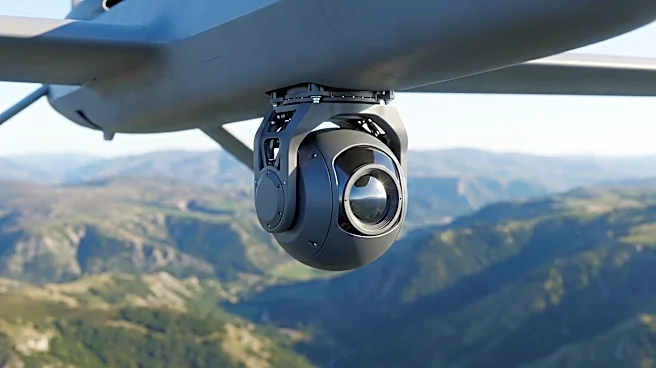
Redwire has announced the introduction of its new Octopus 140 LWIR payload, a gyro-stabilized electro-optical/infrared (EO/IR) system designed for demanding defense and security applications. This payload aims to provide reliable long-range Intelligence,
Surveillance, and Reconnaissance (ISR) performance and superior situational awareness around the clock. The Octopus 140 LWIR is engineered to deliver exceptional image clarity, precise stabilization, and extended-range capabilities without significantly increasing the weight of the aircraft it is mounted on. It addresses operational challenges where traditional LWIR payloads often require trade-offs between stabilization, thermal detail, or system weight, which can lead to degraded imagery, reduced aircraft endurance, and inaccurate ranging. The system is built to support rapid detection, recognition, and identification, featuring integrated laser ranging for accurate target localization up to 4 km and multi-mission performance through Full HD EO + LWIR imaging, onboard object tracking, and moving-target indication. The architecture is NDAA-compliant and ITAR-free, making it suitable for various military, border security, and force-protection operations.
Why It's Important?
The introduction of Redwire's Octopus 140 LWIR payload is significant for U.S. defense and security sectors, as it offers advanced capabilities that can enhance mission effectiveness and operational efficiency. By providing clearer thermal detail, exceptional stabilization, and accurate target localization, the payload enables faster decision-making and improved situational awareness for operators of Uncrewed Aircraft Systems (UAS), border security teams, and sensor specialists. This technology can reduce the burden on platforms by being lightweight and SwaP-efficient, thereby preserving aircraft endurance and extending mission durations. The integrated laser rangefinder and onboard processing capabilities contribute to more reliable automated workflows and higher confidence in target identification, which are critical in time-sensitive surveillance and identification scenarios. This development supports the modernization efforts of the U.S. Army and other defense agencies by offering a robust solution for intelligence collection, perimeter defense, search and rescue, and mobile surveillance, ultimately increasing mission success in challenging conditions.
What's Next?
Redwire will likely focus on integrating the Octopus 140 LWIR into various defense and security platforms, including Uncrewed Aircraft Systems (UAS), to demonstrate its capabilities in real-world scenarios. The company is expected to engage with target operators such as border security teams and sensor specialists to showcase the payload's benefits for intelligence collection, perimeter defense, search and rescue, and mobile surveillance. Further development may include expanding the payload's applications and refining its features based on operational feedback. Redwire's participation in events like AUSA 2026, where it plans to display its Octopus payloads, indicates a strategy to actively market and demonstrate these technologies to potential clients within the defense sector. The emphasis on NDAA-compliant and ITAR-free components suggests a clear path for adoption within U.S. government and military programs, potentially leading to widespread deployment in critical missions.
Beyond the Headlines
The development of advanced ISR payloads like the Octopus 140 LWIR reflects a broader trend in defense technology towards enhanced automation, precision, and real-time data processing. This shift has profound implications for military strategy and ethical considerations in surveillance and targeting. The ability to identify targets with higher confidence and act faster, as promised by this technology, could reduce collateral damage and improve the accuracy of military operations. However, it also raises questions about the increasing reliance on automated systems for critical decision-making and the potential for algorithmic bias or errors. The focus on reducing operator workload and accelerating decision-making highlights a move towards more efficient, but potentially less human-supervised, intelligence gathering. Furthermore, the emphasis on NDAA-compliant and ITAR-free components underscores a strategic effort to maintain supply chain security and technological independence for U.S. defense capabilities, mitigating risks associated with foreign dependencies in critical military hardware.