








What's Happening?
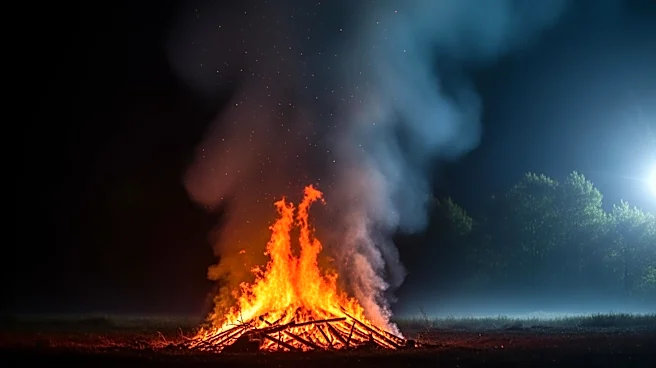
The annual Lag B'Omer bonfires in Israel have been identified as a significant source of air pollution, with pollutant concentrations rising dramatically during the event. According to data from the Environmental Protection Ministry, the fine particles
released during these bonfires can account for up to 86% of all particle pollution, compared to about half on regular days. These particles are small enough to penetrate the respiratory tract and enter the bloodstream, potentially causing a multisystem inflammatory response. The health implications are severe, particularly for children, who are most sensitive to these pollutants. Acute exposure can lead to respiratory issues, while chronic exposure is linked to more serious health conditions, including cancer. The bonfires also contribute to environmental damage through the burning of non-natural materials, such as painted wood and plastics, which release additional toxic substances.
Why It's Important?
The pollution from Lag B'Omer bonfires poses a significant public health risk, particularly to vulnerable populations like children and pregnant women. The fine particles released can exacerbate existing health conditions and contribute to new health issues, including respiratory and cardiovascular diseases. The environmental impact is also concerning, as the burning of plastics and other materials releases hazardous compounds that can contaminate the soil and water. This event highlights the broader issue of air pollution and its health effects, emphasizing the need for increased public awareness and policy measures to mitigate these risks. The situation underscores the importance of finding sustainable alternatives to traditional practices that harm the environment and public health.
What's Next?
Efforts to reduce the environmental impact of Lag B'Omer are underway, with recommendations to adopt alternative activities such as lantern walks or social gatherings without fire. If bonfires are still held, it is advised to reduce their number and size and to use only approved wood. These measures aim to decrease the emission of hazardous substances and protect public health. The event also serves as an educational opportunity to promote sustainability, particularly among children, by explaining the environmental and health impacts of bonfires. Continued public awareness and policy initiatives will be crucial in addressing the pollution problem associated with Lag B'Omer and similar events.
Beyond the Headlines
The pollution from Lag B'Omer bonfires is part of a larger issue of open burning and its environmental and health consequences. The event highlights the need for a cultural shift towards more sustainable practices and the importance of individual actions in contributing to broader environmental challenges. The use of disposable utensils during the celebrations also adds to the environmental burden, as these items take hundreds of years to decompose. The situation calls for a reevaluation of traditional practices and the adoption of more environmentally friendly alternatives to protect both public health and the environment.