


What's Happening?
A federal judge has ruled that a significant part of President Trump's executive order, which aimed to cut federal funding for NPR and PBS, is unconstitutional. The order was intended to stop federal funds based on the editorial viewpoints of these media
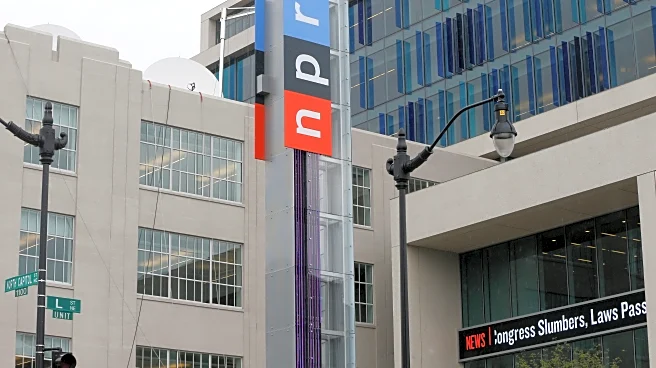
organizations. Despite the ruling, the broader campaign led by President Trump to strip NPR and PBS of federal support continues, as Congress had already rescinded funding last summer. The judge's decision is seen as a victory for the First Amendment, affirming the rights of a free and independent press. The ruling could potentially lead to some future funding for these public broadcasters, as they have historically received grants from federal agencies. The executive order, titled 'Ending Taxpayer Subsidization of Biased Media,' was challenged in court by NPR and PBS, who argued it was a form of unconstitutional viewpoint discrimination.
Why It's Important?
This ruling is significant as it underscores the protection of press freedom under the First Amendment, preventing the government from using financial leverage to influence or penalize media organizations based on their editorial content. The decision could have broader implications for how public media is funded and supported in the U.S., potentially restoring some financial support that was cut due to the executive order. It also highlights the ongoing tension between the government and media organizations, particularly those perceived as critical of the administration. The ruling serves as a reminder of the judiciary's role in upholding constitutional rights against executive overreach, reinforcing the principle that government power cannot be used to suppress disfavored expression.
What's Next?
Following the ruling, NPR and PBS may seek to restore some of the funding that was previously cut. The decision could prompt further legal and political discussions about the role of public broadcasting and its funding in the U.S. It remains to be seen how Congress and the administration will respond to the ruling, and whether there will be efforts to reallocate funds to support public media. The ruling may also influence future executive actions and legislative measures concerning media funding and press freedom.