






What's Happening?
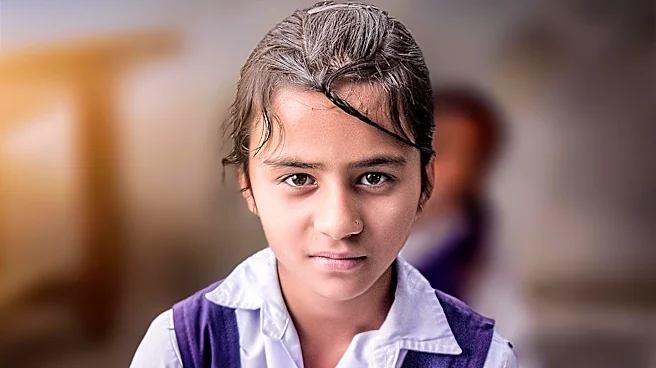
An Italian aid worker, Susanna Fioretti, founder of Nove Caring Humans, has revealed that daughters of Taliban members are attending a secret school in Kabul. This school was established to provide education to Afghan girls and women who are otherwise
barred from formal schooling by the Taliban regime. Fioretti discovered this two years after the school opened, noting that the parents, despite their affiliation with the Taliban, desired education for their daughters. The school operates discreetly, with classes held in a room designed to resemble a women-only workshop, where educational materials are hidden and sewing machines are brought out during inspections. This arrangement highlights a complex dynamic within Afghanistan, where some individuals with ties to the Taliban are reportedly working to circumvent the regime's strict educational restrictions.
Why It's Important?
This development is significant as it exposes an internal contradiction within the Taliban's policies regarding women's education. While the regime officially bars girls from education beyond the sixth grade and women from universities and most jobs, the fact that daughters of some Taliban members are attending secret schools suggests a nuanced and potentially fractured approach to these restrictions. This could indicate a desire among some within the Taliban to provide their own families with opportunities denied to the general female population, or it might reflect a more moderate faction attempting to subtly undermine the hardline stance. The existence of such schools, even if operating under constant threat, offers a glimmer of hope for the future of female education in Afghanistan and underscores the resilience of those seeking knowledge despite severe repression.
What's Next?
The continued operation of these underground schools, particularly with the involvement of Taliban members' families, suggests a persistent, albeit covert, resistance to the regime's educational bans. It remains to be seen whether this internal inconsistency will lead to any softening of the Taliban's official stance on women's education or if these secret initiatives will face increased scrutiny and crackdowns. The international community and aid organizations will likely continue to monitor these developments closely, seeking opportunities to support educational access for Afghan girls and women. The long-term impact on Afghan society will depend on the scale and sustainability of these secret educational efforts and the potential for internal pressures to influence the Taliban's policies.
Beyond the Headlines
The revelation of Taliban members' daughters attending secret schools delves into the deeper ethical and cultural dimensions of the conflict in Afghanistan. It highlights the universal human desire for education, even among those whose ideology officially suppresses it. This situation raises questions about hypocrisy and the potential for personal values to conflict with political dogma. It also underscores the profound impact of education on individuals and families, suggesting that even within a restrictive regime, the perceived benefits of learning can transcend ideological barriers. The clandestine nature of these schools also speaks to the courage and determination of educators and students who risk severe consequences to pursue knowledge, reflecting a quiet but powerful form of resistance against oppression.