








What's Happening?
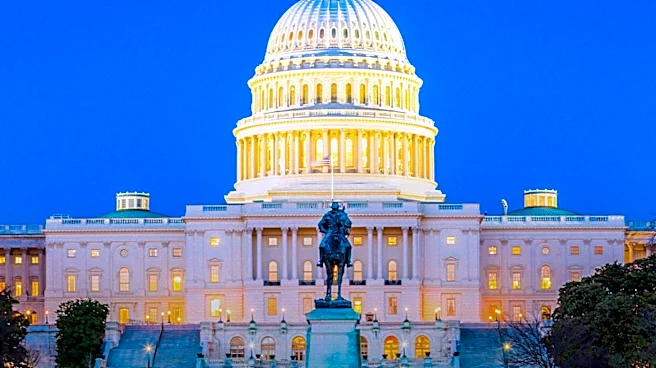
Lawmakers are currently debating various proposals to address a projected shortfall in the Social Security program's retirement trust fund reserves. Without intervention, beneficiaries could face a 22% reduction in payments by 2032. A bipartisan group
of senators, including Bill Cassidy, Thom Tillis, Dick Durbin, and Tim Kaine, have called for legislative action to prevent this outcome. Proposed solutions include increasing payroll taxes for higher earners, eliminating the payroll tax cap, raising the retirement age, and creating a government-backed investment fund. Each proposal has its supporters and critics, with debates centering on the balance between increasing revenue and adjusting benefits.
Why It's Important?
The potential reduction in Social Security benefits could significantly impact millions of Americans who rely on these payments for retirement income. The debate over how to address the funding gap highlights broader issues of economic inequality and the sustainability of social safety nets. Increasing taxes on higher earners could generate significant revenue, but may face opposition from those concerned about economic growth and investment. Raising the retirement age could disproportionately affect lower-income workers and those in physically demanding jobs. The outcome of these debates will have long-term implications for U.S. economic policy and the financial security of future retirees.
What's Next?
As the 2032 deadline approaches, pressure is mounting on Congress to reach a consensus on how to address the Social Security funding shortfall. The proposals on the table will likely undergo further scrutiny and negotiation, with potential adjustments to balance fiscal responsibility and social equity. Stakeholders, including advocacy groups and policymakers, will continue to influence the debate, emphasizing the need for a sustainable solution that protects current and future beneficiaries.