




What's Happening?
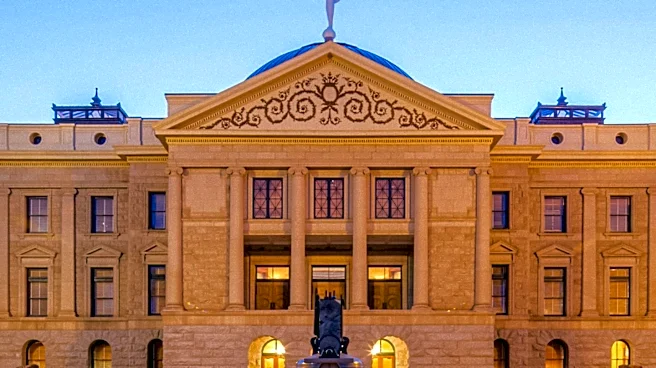
Hugh Hewitt, a prominent media figure, recently engaged in a discussion with Jonathan Williams, President and Chief Economist of the American Legislative Exchange Council (ALEC). The conversation centered on Arizona's recent school choice victory and broader
efforts to enhance government transparency by reducing waste, fraud, and abuse in government programs. Hewitt highlighted the Arizona Supreme Court's decision to uphold education freedom programs, noting that over 200,000 of the 421,451 signatures submitted to repeal the program were found to be ineligible or duplicates. Williams lauded this ruling as a significant win for school choice, not just in Arizona but for the movement nationwide. Both Hewitt and Williams emphasized the critical need for meticulous signature verification in such initiatives to prevent fraudulent activities. The discussion also touched upon the importance of ongoing efforts, including those from the Trump administration, to address waste, fraud, and abuse within various government programs, often operating on 'autopilot.'
Why It's Important?
This discussion underscores the ongoing national debate surrounding school choice and government accountability. The Arizona Supreme Court's decision to uphold education freedom programs could serve as a precedent and encouragement for similar initiatives in other states, potentially reshaping the educational landscape across the U.S. The emphasis on verifying signatures in ballot initiatives highlights a critical aspect of democratic processes, aiming to safeguard against fraud and ensure the integrity of public referendums. For proponents of school choice, this ruling represents a significant validation of their efforts to provide diverse educational options. Conversely, opponents may view it as a challenge to public education systems. Furthermore, the broader conversation about reducing waste, fraud, and abuse in government programs is vital for fiscal responsibility and public trust. It reflects a continuous effort to optimize taxpayer money and improve the efficiency of public services, impacting various sectors from education to general government operations.
What's Next?
Following the Arizona Supreme Court's decision, proponents of school choice are likely to intensify their efforts to expand similar education freedom programs in other states, potentially leading to more legislative battles and ballot initiatives. The call for rigorous signature verification will likely prompt increased scrutiny of future petition drives, potentially leading to stricter regulations or more robust challenge processes. This could influence how grassroots movements and advocacy groups operate when attempting to introduce or repeal legislation. Additionally, the ongoing focus on reducing waste, fraud, and abuse in government programs suggests continued legislative and administrative actions aimed at improving governmental efficiency and accountability. This may involve new task forces, audits, and policy reforms at both federal and state levels, impacting how government agencies manage funds and programs. Stakeholders on both sides of the school choice debate will likely continue to mobilize, advocating for their respective positions in upcoming elections and policy discussions.
Beyond the Headlines
The Arizona school choice victory and the broader discussion on government transparency touch upon fundamental aspects of American governance and societal values. Ethically, the debate over school choice often involves questions of equitable access to quality education, parental rights, and the role of public versus private institutions in shaping future generations. The integrity of signature collection processes for ballot initiatives is crucial for maintaining public trust in direct democracy; any perceived 'funny business' can erode faith in the system. Legally, the Arizona ruling reinforces the judicial branch's role in interpreting and upholding state laws related to education funding and parental options. Culturally, the emphasis on reducing government waste reflects a persistent American value of fiscal conservatism and efficient public service. This ongoing dialogue highlights the tension between individual liberties, such as parental choice in education, and collective responsibilities, like ensuring a robust public education system and accountable government spending. The long-term implications could include shifts in educational funding models and increased public demand for transparency in all government operations.