





What's Happening?
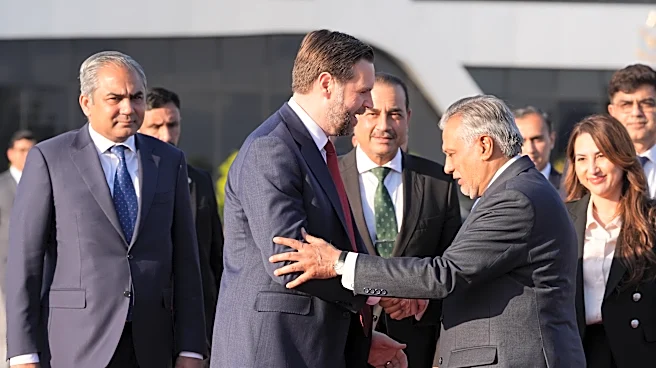
The United States, under President Trump's directive, has initiated a blockade of the Strait of Hormuz following unsuccessful peace talks with Iran in Pakistan. The discussions, led by U.S. Vice President JD Vance, failed due to Iran's continued pursuit
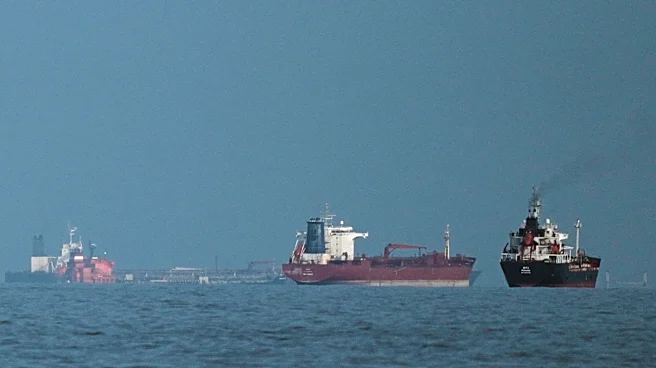
of nuclear weapons. As a result, U.S. Central Command announced the enforcement of a blockade on maritime traffic entering and exiting Iranian ports. This move has led to a significant increase in crude oil prices, which rose by 7% to surpass $100 per barrel. The blockade is part of a broader strategy to pressure Iran into abandoning its nuclear ambitions. Despite President Trump's assertion that other nations would support the blockade, the U.K. has publicly stated it will not participate.
Why It's Important?
The blockade of the Strait of Hormuz, a critical chokepoint for global oil shipments, has immediate implications for international oil markets and geopolitical stability. The rise in oil prices could lead to increased costs for consumers and businesses, potentially impacting economic growth. The U.S.'s unilateral action may strain diplomatic relations with allies, particularly those reliant on Middle Eastern oil. Additionally, the blockade could escalate tensions in the region, increasing the risk of military confrontations. The situation underscores the complexities of U.S.-Iran relations and the broader geopolitical dynamics in the Middle East.
What's Next?
The blockade's enforcement will likely prompt reactions from major global powers and international organizations. Countries dependent on oil passing through the Strait of Hormuz may seek diplomatic solutions to ensure the flow of energy resources. The U.S. may face pressure to engage in further negotiations with Iran or to seek multilateral support for its actions. The situation could also influence upcoming political discussions and decisions within the U.S., particularly regarding foreign policy and military strategy. Monitoring the responses from Iran and other regional actors will be crucial in assessing the potential for conflict escalation.