





What's Happening?
Sgt. Jesse Grabow of the Minnesota State Patrol has clarified the law regarding stopping for school buses with flashing red lights, specifically addressing scenarios at intersections. According to Sgt. Grabow, motorists must stop at least 20 feet from
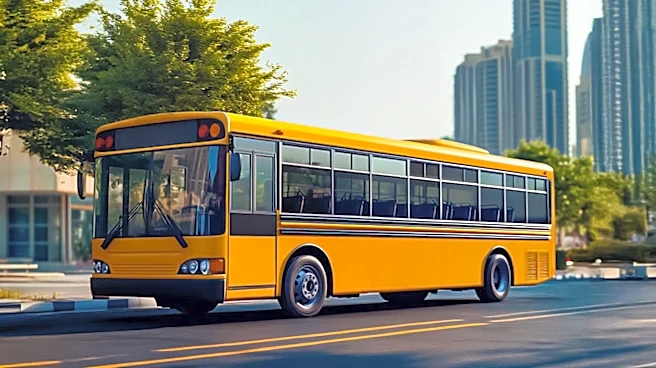
a school bus displaying flashing red lights, regardless of whether the stop arm is extended. This rule applies when approaching the bus from behind and from the opposite direction on undivided roads. However, cross-traffic at an intersection is not expected to stop if the bus is approaching from a cross street and stops before the intersection with red lights activated, and there is no stop sign for the cross-traffic. The rationale is that cross-traffic cannot see the bus's lights or stop arm to be warned of the stop.
Why It's Important?
This clarification is crucial for public safety and legal compliance, particularly for drivers navigating complex intersection scenarios involving school buses. Misunderstanding these laws can lead to dangerous situations for children boarding or exiting buses, as well as legal penalties for drivers. The distinction between approaching a bus from behind or the opposite direction on an undivided road versus cross-traffic at an intersection is vital. It highlights the limitations of current school bus warning systems in multi-directional traffic flows and underscores the need for drivers to be constantly vigilant around school zones. Ensuring clear communication of these rules helps prevent accidents and protects students.
What's Next?
The Minnesota State Patrol will likely continue to educate the public on school bus safety laws through various channels, including public service announcements and community outreach. Drivers are encouraged to familiarize themselves with these specific regulations to ensure compliance and enhance safety for students. Local law enforcement agencies may also increase their presence in school zones to enforce these laws, especially during peak school hours. Ongoing efforts to improve road design and traffic management around schools could also be considered to mitigate the risks associated with school bus stops at intersections.
Beyond the Headlines
This issue extends beyond simple traffic law enforcement; it touches upon the broader challenge of designing safe transportation systems for children. The inherent limitations of school bus warning signals in complex traffic environments, such as intersections, reveal a need for innovative solutions. This could include advanced warning systems for cross-traffic, improved road signage, or even changes in school bus stop locations to avoid high-risk intersections. The incident also underscores the importance of continuous driver education, as traffic laws can be nuanced and context-dependent. Ultimately, the goal is to create an environment where children are safe during their commute to and from school, requiring a multi-faceted approach involving legislation, enforcement, education, and infrastructure improvements.